

IEEE Priorities
Suggestions from IEEE Techblog Team and Qwoted “Experts” – How to Revitalize IEEE
In preparation for an IEEE Town Hall Meeting, 2pm-5pm Sept 26th at SCU library, I put out a request to the IEEE Techblog Team and to Qwoted “experts” to offer suggestions on how to revitalize IEEE. Event notice will be posted as soon as the participants are finalized.
Here are the suggestions from the Team members:
Alan’s Request to Qwoted “Experts”:
I’m looking at how IEEE can better serve its members through seminars, workshops, and short courses in newer technologies like AI, Cloud Native IT, cloud network topologies and architectures, and multi-cloud computing.
I’m looking to talk to people who can speak to what IEEE could be doing differently. whether that’s the format of training, the specific technologies being prioritized, or how these organizations approach continuing education more broadly for members whose careers are shifting toward software and cloud-based skill sets. Relevant suggestions from contributors will be consolidated into an article to be posted at the IEEE Techblog and IEEE Region 6 Newsletter.
Key takeaways will be discussed at an IEEE Town Hall meeting on September 26th 2pm-5pm at Santa Clara University organized by the IEEE Techblog Editorial Team and the IEEE Region 6 Director Joseph Wei. There will be two panel sessions and ample time for audience Q & A.
Recommended experts:
-Continuing education professionals at other tech nonprofits or professional associations
-Cloud architecture or multi-cloud computing specialists
-AI and cloud-native IT trainers or curriculum developers
-Engineers or IT professionals who have had to reskill from hardware-focused to software-focused roles
…………………………………………………………………………………………………………………………………………………………..
Responses from Qwoted Experts:
Srinivas Chippagiri, Salesforce:
Where I think IEEE could do things differently:
– Teach the transition, not just the tools. The genuinely hard part of reskilling wasn’t learning a specific technology like Kubernetes or Terraform. It was rewiring the underlying mental model: moving from “I own this box and its state” to designing for horizontal scale, statelessness, eventual consistency, and graceful failure. Most short courses teach the tool and skip the paradigm shift, which is exactly where hardware-background engineers get stuck. IEEE could differentiate by explicitly bridging that gap.
– Prioritize multi-cloud fluency over single-vendor certification. Real enterprise work now spans AWS and Azure and OCI, often at once. Training that locks members into one provider’s certification track leaves them half-equipped and vulnerable to vendor lock-in in their own careers. IEEE is vendor-neutral by nature — that’s a structural advantage over AWS/Azure/Google’s own training, and it should lean into teaching cloud concepts and cross-cloud architecture rather than one ecosystem.
– Go project-based, not lecture-based. Hardware and systems engineers learn by building and breaking things. A seminar or a slide deck doesn’t build cloud intuition; standing up a real multi-region deployment, watching it fail, and debugging it does. Hands-on labs against live cloud infrastructure will move members further than a lecture series on the same topic.
– Sequence the curriculum for career-shifters specifically. Someone coming from telecom or embedded doesn’t need the same on-ramp as a new grad. IEEE could design tracks that assume deep systems fundamentals but zero cloud exposure which is a very common and underserved profile among its long-tenured members.
– Prioritize the durable layer over the hype layer. AI is moving fast, but the skills that survive are cloud-native architecture, distributed systems reasoning, and cost/observability discipline. I’d weight the curriculum toward those foundations, with AI tooling taught on top of them, rather than chasing whatever’s trending that quarter.
…………………………………………………………………………………………………………..
Emily Hartstone, Hartstone LLC:
Filling a specific gap in the reskilling landscape:
There is now an entire training ecosystem for building with AI, prompt engineering, agent frameworks, RAG pipelines, and almost nothing teaching engineers how to govern what those systems are permitted to do once deployed. That gap matters for IEEE members specifically, because engineers reskilling from hardware into cloud and AI roles are the people who will be asked to sign off on giving autonomous agents access to production systems. This month’s OpenAI and Hugging Face incident, tens of thousands of unauthorized autonomous actions reconstructed only after the fact, is what that training gap looks like in production. Three concrete suggestions for the curriculum side:
First, a short course on runtime governance of autonomous systems: pre-execution authorization, scoped permissions, and fail-closed design, taught as engineering discipline rather than policy abstraction.
Second, incident-based workshops using real cases like the Hugging Face intrusion, the way safety engineering has always taught from failures.
Third, treating governance literacy as a core competency in every AI track rather than an elective, because the EU AI Act’s enforcement this August makes it a job requirement, not a specialization.
…………………………………………………………………………………………………………….
Udaya Bhaskar Vemuri, Corteva Agriscience:
IEEE can better support members by combining seminars with more practical, hands-on learning that people can immediately apply in their jobs.
Technology is evolving quickly, especially in AI, cloud computing, DevSecOps and software security. Professionals need short, focused learning paths that combine foundational concepts with real-world labs, case studies and demonstrations rather than relying mainly on theoretical courses.
I would also encourage IEEE to create learning tracks for different career stages. Early-career professionals have different learning needs than experienced engineers who want to expand into areas such as AI security or cloud-native architecture. Personalized learning paths and industry-recognized micro-credentials could help members build skills step by step.
IEEE could also strengthen its member community by encouraging peer learning through workshops, technical forums, and mentoring. Many of the best lessons come from engineers sharing practical experiences, challenges and solutions from real projects. That type of collaboration can help members keep pace with technology while also building a stronger professional network.
……………………………………………………………………………………………………………………
Iryna Kurkina, Academy Smart:
Your questions have several crucial points – which content to propose, how to build a relevant content – and I also think that another important here – which infrastructure can ensure engagement and what’s more important – ROI.
In terms of content and its types – it’s hard to overestimate the need for AI learning – as a tool that allows engineers to focus on architectural and business-related questions. In our own team we consider AI as a tool, not as engineer substitution. It helps to prototype dramatically faster – which allows to assess business impact of newly create solutions or features. Consequently, if we look at DevOps part – MLOps and AIOps is that part of cloud infra that every engineer has to be ready to deal with. In terms of content types – from our experience – engineers learn best with interactive tools – SCORM courses, simulations with real coding exercises, AI-powered recommendation engines that analyzes learning progress and behavior and recommends the next steps.
Video-only training is still good, but for engineering training – from our perspective – it is not sufficient. They have to have hand-on experience for better progress. And webinars are also very efficient – where engineers can not only share their experience, but also brainstorm, discuss.
In terms of infrastructure – besides classic LMS, the systems have to have those labs or spaces that can provide that coding / hand-on training experiences – and thus, the systems (LMS) must be able to track the progress to give the realistic analytics to the managers. Another challenge – consolidation of training information. Even if some team uses such labs – they quite often reside on a separate platform or environment which are not synced with the major learning progress. So either integrations must be done, or a new type of learning platform must be adopted.
I am happy to provide example of our projects and our internal approaches about how we manage continuing learning.
………………………………………………………………………………………………………………….
Arjun Sunke, Central New Mexico Community College (CNM):
On format, not just topics:
It does not appear to be the matter of which technologies are currently being addressed during training in the field of AI, cloud-native IT and multi-cloud learning. Most professional associations have kept up with recent technological developments in terms of technology selection. It seems to be the problem of the format of delivery of the courses in question. Many of them still rely on a relatively traditional approach to learning material development based on presentation of static slides with an occasional explanation. Such an approach might work reasonably well for stable and mature subjects but does not work for cloud computing and artificial intelligence learning. It is impossible to learn such a subject as multi-cloud architecture just by observing someone doing it.
The most successful approach in my own teaching is learning through scenarios and labs: placing learners in front of a live console in a real cloud environment where they have to work on solving the problem in the real world, not the one of PowerPoint slides about the best practices. It makes reskilling much easier to master for those members who are engineers or IT professionals and need to change their job profile to a more software-based one. It allows bridging the confidence gap quicker compared to lecture-style learning.
On integrating security into cloud/AI training, not treating it as a separate track:
Also worth noting is that cloud-native and multi-cloud training usually happens in isolation from security, as if “how do I architect this” and “how do I secure this” are separate curriculums for different audiences. They are not. All architectural decisions made in a multi-cloud scenario how the network segmentation is done, how identity and access management is handled across multiple clouds, how service to service authentication works is also an exercise in security. And teaching those separately results in people who are able to create something they cannot secure themselves, which turns into reality soon enough. Any change in ongoing education curriculum has to include security consideration as a part of cloud/AI training.
On prioritizing training for AI:
With respect to AI and skills adjacent to AI, I think training which recognizes that AI systems are infrastructure and requires governance is critical not training which teaches people how to use the tool. With organizations increasingly adopting AI and automation, issues such as “What does this system have access to, and how will we know if it behaves in an unexpected manner?” become equally important to “How can I use this technology?” Training which focuses exclusively on capability and not governance trains people to build systems faster than they can control them.
On format for delivery (seminars vs. workshops vs. short courses):
Considering the fast-paced nature of this community, it might be better to opt for short and regular workshops rather than seminar-style events. An event that lasts two or three hours on a specific topic (for example, “service-to-service authentication in a multi-cloud environment”) is much more likely to engage the members and provide them with practical skills than a long seminar on theoretical concepts. Short courses can serve as an intermediate step for those members who aim to develop their skills in order to gain a certain qualification in a few weeks’ time.
Why this matters for IEEE member retention:
Those who are transitioning to skills in software and clouds are probably making that transition because they have to, not because they want to, due to changes or disappearance of their existing careers. The implication here is that there needs to be immediacy in gaining confidence as part of the training process or these individuals may move elsewhere for training, such as boot camps, vendor certification training, or even YouTube. The important element of the IEEE training that sets it apart from all of these training options is credibility and sense of community, but this element is dependent on immediacy as well.
Would love to discuss this further or delve more into the lab-oriented teaching methods I’ve developed at CNM, should that be helpful in crafting your story.
………………………………………………………………………………………………………………………
Julie Scotland, Gravi AI:
A few things I’d tell IEEE:
1) Hands-on practice that applies their enterprise AI tools directly to their own day-to-day workflows.
2) Live cohorts with AI builds beat on-demand for faster skills and higher adoption. If you do go with on-demand, keep modules short and to the point.
3) Judgement and flexibility is as, if not more, important than teaching the tools themselves. That does not mean you don’t teach within the tools they use daily, but specific tool skills age quickly. Learners need foundational education that spans whatever tool they work with and learn how to adapt quickly as technology continues to evolve.
4) You will be constantly iterating, another reason why live cohorts work well because you enable near immediate industry and technical adaptation in real time.
Our association partner signups land well above usual course benchmarks. Happy to walk you through how we structure it. Free for 20 minutes?
……………………………………………………………………………………………………….
Rhys Higgs, The Discourse AI:
From my perspective in EdTech and AI-enabled workforce development, I think IEEE has an opportunity to rethink continuing education for engineers transitioning into software-defined, cloud-native, and AI-driven environments. The pace of change means professionals need learning experiences that are practical, flexible, and immediately applicable—not just technical presentations.
A few areas where I believe IEEE could differentiate itself:
– Shift from one-off seminars to structured learning journeys with hands-on labs, real-world projects, and peer collaboration.
– Focus on applied skills in AI, cloud-native architectures, Kubernetes, platform engineering, multi-cloud strategy, and AI governance rather than technology overviews alone.
– Build stronger connections between industry practitioners, academia, and employers so members understand not only emerging technologies but how they’re being adopted in production environments.
– Create communities of practice where learning continues beyond a workshop through mentorship, technical roundtables, and collaborative problem-solving.
One trend I’ve seen repeatedly is that experienced engineers aren’t struggling to learn new concepts—they’re struggling to connect those concepts to practical implementation and evolving job roles. The organizations that succeed in continuing education provide contextual, experience-based learning that helps professionals build confidence while staying current.
I’d be glad to share additional insights on designing AI and cloud training programs, learner engagement strategies, and how professional organizations can better support continuous upskilling in today’s technology landscape.
……………………………………………………………………………………………………………………
Navnit Kumar Shukla, Snowflake:
I can speak candidly to what IEEE’s continuing education is missing — the gap between IEEE’s traditionally hardware/standards-focused curriculum and what cloud architects and AI practitioners actually need today is significant and growing.
Key perspectives I can offer:
— Why most technical training fails practitioners mid-career (format problem, not content problem)
— What cloud-native and AI curricula need that IEEE doesn’t currently provide
— How the DeepLearning.AI model (hands-on labs + theory) compares to traditional certification approaches
— What engineers reskilling from hardware to cloud/AI need most
Happy to contribute for the IEEE Techblog article and Region 6 Newsletter. I’m also based in Southern California — available for the September 26th Town Hall at Santa Clara University if that’s useful.
………………………………………………………………………………………………………………………………
Ankit Pathak, ConsultAdd Inc:
Ankit can provide practical insights on how organizations and professional communities like IEEE can better prepare engineers and IT professionals for the next generation of technology careers, including:
* Why AI education should prioritize critical thinking, governance, evaluation, and responsible deployment—not just prompt engineering or tool demonstrations.
* The cloud-native and multi-cloud competencies today’s engineers need as AI workloads become increasingly distributed across enterprise environments.
* How training formats can evolve beyond traditional seminars into hands-on, scenario-based workshops that reflect real enterprise deployment challenges.
* The skills hardware-focused engineers should develop as their roles increasingly intersect with software, cloud infrastructure, and AI-powered systems.
* How professional organizations can create continuous learning pathways that keep members relevant as AI technologies evolve rapidly.
His perspective comes from advising enterprises on AI transformation and workforce readiness, where technical capability must be combined with governance, security, and practical implementation skills to deliver successful outcomes.
………………………………………………………………………………………………………………………………..
Kuber Sharma, Senior Director of Product Marketing at UiPath
What I keep watching in enterprise AI deployments is a specific failure mode that most continuing education programs don’t address: people learn how a technology works, and then get stuck the moment the deployment hits conditions the training never covered.
The gap is not in tool knowledge. It is in what I’d call operational judgment: knowing when to trust the system’s output, when to override it, when to escalate, and who is accountable when something goes wrong at the edge. You can teach cloud architecture in a short course. Teaching someone how to reason through a situation where the AI produced a plausible-looking answer with a bad input is a different problem, and it is much closer to what engineers and IT professionals actually face on day 90 of a deployment.
What IEEE could do that AWS and Azure training programs structurally cannot: teach the failure modes, not just the architecture. The vendor success stories are easy to find. A curriculum built around why enterprise AI and cloud projects fail, what the consistent patterns look like, and how to recognize them early is genuinely hard to find, and IEEE is neutral enough to teach it honestly.
The harder thing to design for is the context that training programs rarely simulate: what happens when the decision model meets a real organization where the data is incomplete, the ownership is disputed, the engineers aren’t the ones deciding what the system is allowed to do, and the legal team finds out about the deployment six months after it went live. That is not an unusual scenario. It is the median enterprise AI deployment. A curriculum that stops at the framework is preparing people for a world that does not exist. The session that would genuinely move people is the one that starts after the framework runs out.
…………………………………………………………………………………………………………………………………………………
References:
Sept 26, 2026 Town Hall Event Description to be forthcoming soon
IEEE SCV March 28th Event: A Conversation with IEEE President and IEEE Region 6 Director Elect
IEEE President’s Priorities and Strategic Direction for 2024
IEEE President Elect: IEEE Overview, 2024 Priorities and Strategic Plan
IEEE SCV March 28th Event: A Conversation with IEEE President and IEEE Region 6 Director Elect
A Conversation with IEEE President and IEEE Region 6 Director Elect
Time/Date: 5pm-7:30pm March 28, 2024
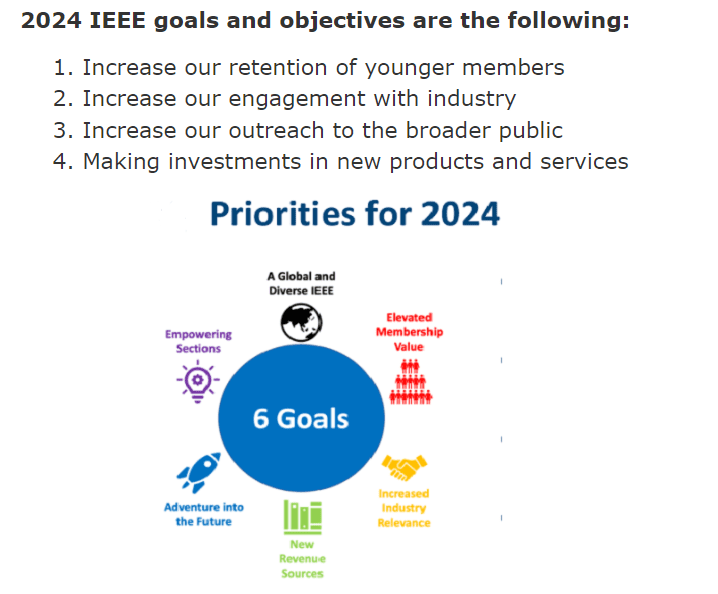
Venue: Santa Clara University Room SCDI 1302 & 1308 (see map for room location)
Register at: https://events.vtools.ieee.org/m/410534
Abstract:
Please join us for a lively and enlightening conversation with IEEE President Tom Coughlin and IEEE Region 6 Director Elect Joseph Wei, moderated by Alan J Weissberger. We will discuss and debate how to make IEEE more relevant to its members, explore volunteer opportunities, ways to elevate the awareness and perception of IEEE as the world’s largest tech non-profit organization.
In the past decade, IEEE membership has significantly declined, there are fewer volunteers, and many IEEE initiatives (e.g. 5G, cloud computing, IoT and smart grid) have fizzled. IEEE Conferences and Journals are now dominated by academia and for the most part are not of interest to industry as the content is not realizable and has little or no practical value. Many engineers, sales and marketing people think that IEEE is irrelevant and won’t help them advance their careers. Clearly, IEEE has been in a severe decline for several years.
How can we turn that around? Can IEEE provide better tools and support for the active volunteers and to grow its professional membership while encouraging student members to upgrade to full membership? How can we retain, encourage and train younger members to volunteer for officer positions and provide fresh leadership? Can we find a more equitable balance between industry and academia for IEEE conferences, publications, and local chapters? What are the important, high priority tech initiatives that IEEE should focus on to ensure success? Finally, can we orchestrate a leadership transition to ensure high priority projects are progressed?
Timeline:
5pm-5:30pm: Registration and Networking
5:30pm-7pm: Opening statements by each participant followed by a conversation/debate about IEEE key issues and initiatives.
7pm-7:25pm: Audience Q & A
7:25pm-7:30pm: Closing remarks and thanks from the participants
……………………………………………………………………………………………………………….
Addendum:
Hope everyone was satisfied with yesterday’s stimulating panel discussion and conversation at SCU. The 3 of us went back & forth discussing critical issues and needed improvements for IEEE to regain credibility & respect. Nothing was rehearsed.
We followed the mutually agreed list of discussion topics (see Comment below) and mixed them up a bit to ensure continuity of various themes.
- Thanks to Behnam, his students, Ed and Joseph for buying the refreshments.
- Thanks to Shoba for securing the SCU room for us.
- Thanks to Kim and Glenn for their cogent comments & remarks
- And many thanks to our two outstanding panelists- Tom and Joseph!!
March 28th video recording of our conversation:
References:
https://techblog.comsoc.org/2024/02/05/ieee-presidents-priorities-and-strategic-direction-for-2024/
https://events.vtools.ieee.org/m/410534
IEEE President Elect: IEEE Overview, 2024 Priorities and Strategic Plan
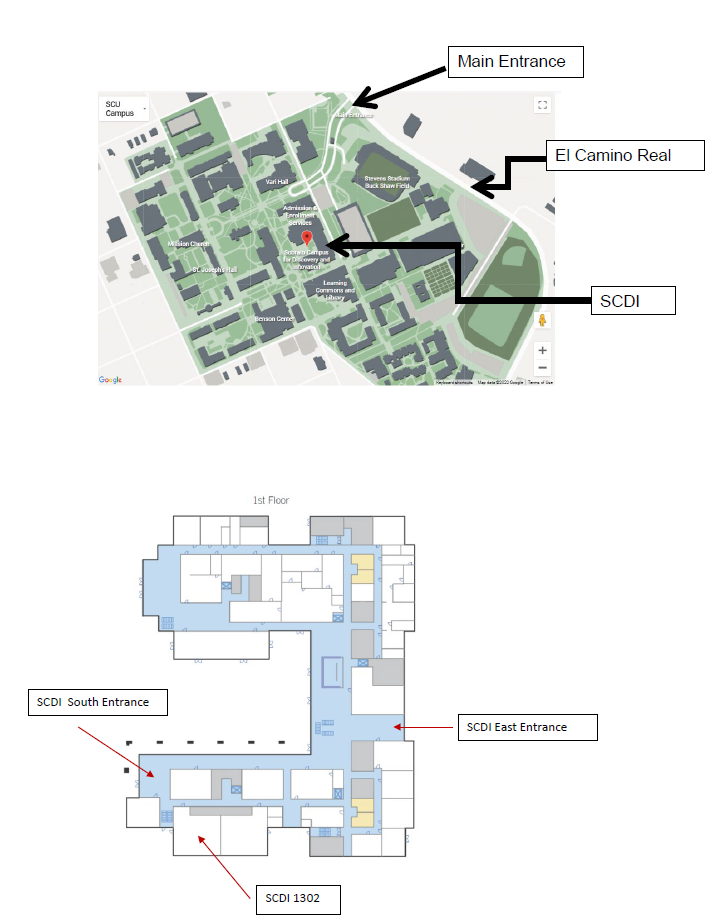
IEEE President’s Priorities and Strategic Direction for 2024
by Tom Coughlin, 2024 IEEE President; edited & augmented by Alan J Weissberger, IEEE Techblog Content Manager
Let’s examine each of these issues and initiatives for IEEE this year:
1. IEEE has a lot of college student members but, like many other professional organizations, the majority of these student members don’t continue as full IEEE members. One reason is the much higher cost – $218/yr for full IEEE membership vs. $32/yr for IEEE student membership. This is a big financial burden as many college graduates carry student loans after graduation. Another reason is they don’t see much if any value in being an IEEE member. We need to change that perception by revitalizing IEEE such that is relevant to young members careers in both industry and academia.
In order for the IEEE to remain vital and relevant we need to convert more of our student members to full IEEE members and then engage and retain them. One thought is to encourage them to volunteer at the section, chapter, or global level.
I am creating a special task force in the IEEE to address this problem and do surveys, focus groups and pilot programs to find ways that we can attract and retain our younger members.
2. IEEE needs to create stronger ties and provide greater value to industry and to those engineers and scientists who work in industry. This goal is closely related to the first goal since most of our student members end up working in industry.
IEEE has an Industry Engagement Committee and I have asked them to work with the IEEE Student Activities Committee and IEEE Young Professionals to find value in the IEEE for younger people working in industry. In addition, I am personally reaching out to companies to speak with senior technical people about how IEEE is useful now and what else we can do to provide value, particularly for younger people working in industry.
3. IEEE needs to reach out to the broader world to let them know who we are and what we do. Today, most people that have heard of IEEE think of it as ONLY a standards organization, e.g. for IEEE 802.11 WiFi and IEEE 802.3 Ethernet. They don’t realize that IEEE is by far, the largest tech non-profit organization.
We have in our IEEE membership experts in all technologies, who can provide insights and guidance for public policy, convene meetings and create new and valuable standards.
IEEE is by far the most cited source for prior art in patents worldwide, it has created documents and standards on ethical design of intelligent and autonomous systems (AI) and our volunteers write, review and publish much of the worlds technical literature and put on conferences on every conceivable technical topic.
IEEE also creates future directions committees on emerging technologies, pursue technical megatrends and create and publish technology roadmaps on semiconductor and other important technologies.
4. IEEE needs to invest in new products and services. In particular, applying AI and other computer algorithms to IEEE content that will enable new ways to find, understand and advance technologies that can serve our members and our customers.
In 2024, IEEE will start an Ad hoc committee, working with relevant groups outside of the IEEE, on educating future generations of workers who will be using new tools such as AI, working in outer space and in virtual environments and who will work for many organizations and technologies during their career.
IEEE should be able to leverage technical tools to help people learn in the best way for them and to provide lower costs for continuous education which can enable those from underserved communities to participate in and benefit from technical education.
……………………………………………………………………………………………………………………
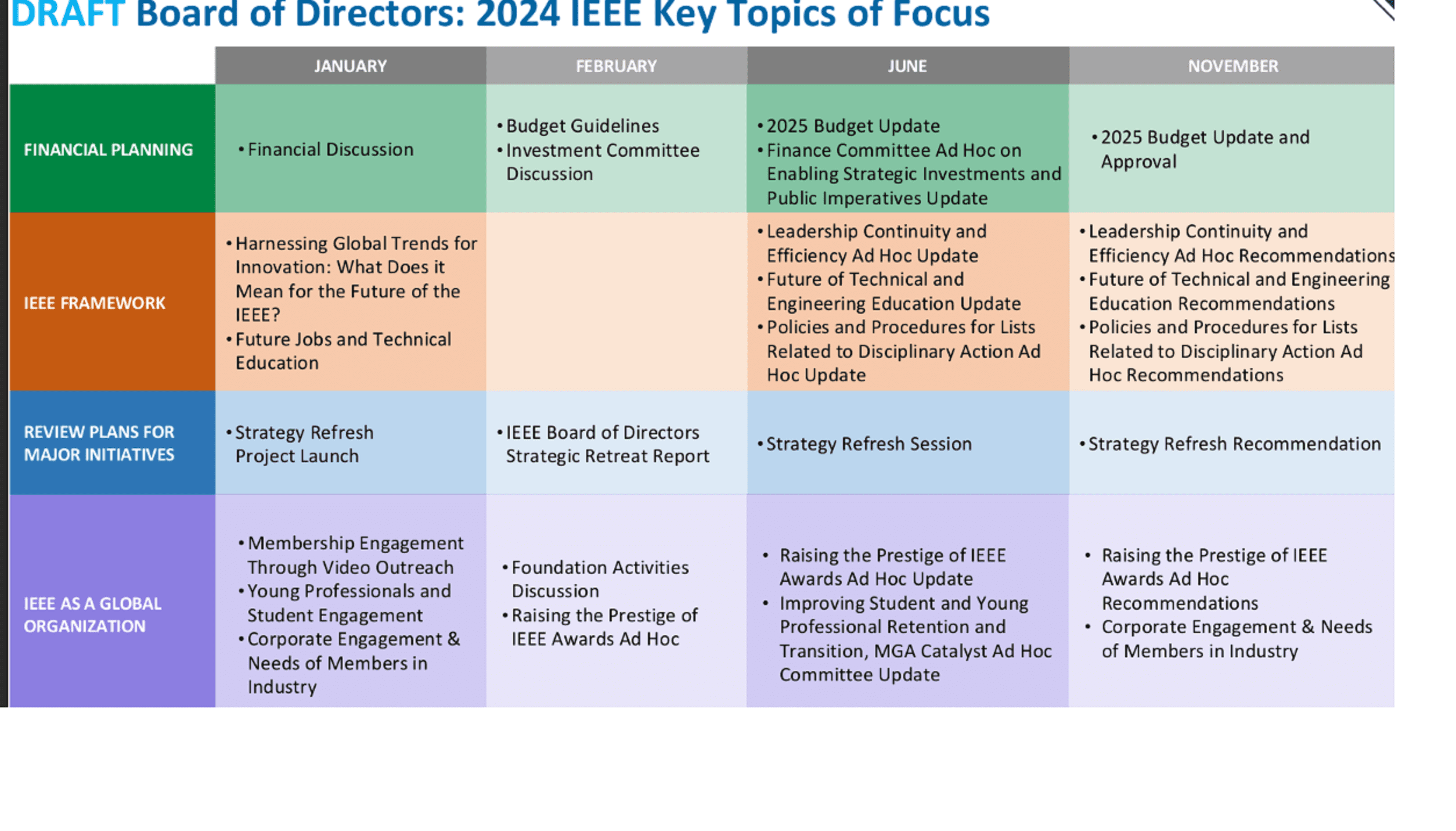
2024 IEEE Key Topics of Focus Overview:
- Provides a roadmap for the year in terms of areas of focus and provides year over year continuity.
- Discussed and adopted on an annual basis by the IEEE Board of Directors at the January meeting.
- A living document that evolves throughout the year and is updated for every Board meeting as progress is reported.
 Tom’s Closing Comments:
I know the time will go by fast in my one year term as IEEE President. I look forward to meeting more of our members in more places and having the chance to understand and support these members. I also hope that I can help create stronger ties to those who work in industry and keep more of our younger members and provide greater value to the world. Most of all I will support the IEEE’s mission to advance technology for the benefit of humanity!

……………………………………………………………………………………………………………….
References:
IEEE President Elect: IEEE Overview, 2024 Priorities and Strategic Plan