

NBN selects Amazon Project Kuiper over Starlink for LEO satellite internet service in Australia
Government-owned wholesale broadband operator NBN Co will become the first major customer of Amazon’s Project Kuiper Low-Earth Orbit (LEO) satellite internet technology in Australia beginning in the middle of 2026. At that time, NBN Co plans to offer wholesale residential-grade fixed LEO satellite broadband services to more than 300,000 premises within our existing satellite footprint via participating Retail Service Providers (RSPs).
The agreement will enable NBN Co to transition from its existing geostationary Sky Muster satellite service over the coming years and will complement NBN Co’s investments in fiber and fixed wireless upgrades for regional Australia.
NBN Co will shortly start consultation with RSPs, regional communities and stakeholders, to help inform what speed tiers are offered, wholesale pricing and the upgrade for customers. The consultation will consider the offer of equipment and professional initial standard installation and assurance at no cost for existing eligible NBN satellite customers, via participating RSPs.
…………………………………………………………………………………………………………………………………………………………………………………………………………
Project Kuiper’s low-latency, high-bandwidth satellite network will provide significant improvements to the quality and reliability of broadband for eligible regional, rural and remote communities. To achieve its goals, Project Kuiper is deploying thousands of satellites in low Earth orbit —connected to each other by high-speed optical links that will create a mesh network in space—and linked to a global network of antennas, fiber, and internet connection points on the ground.
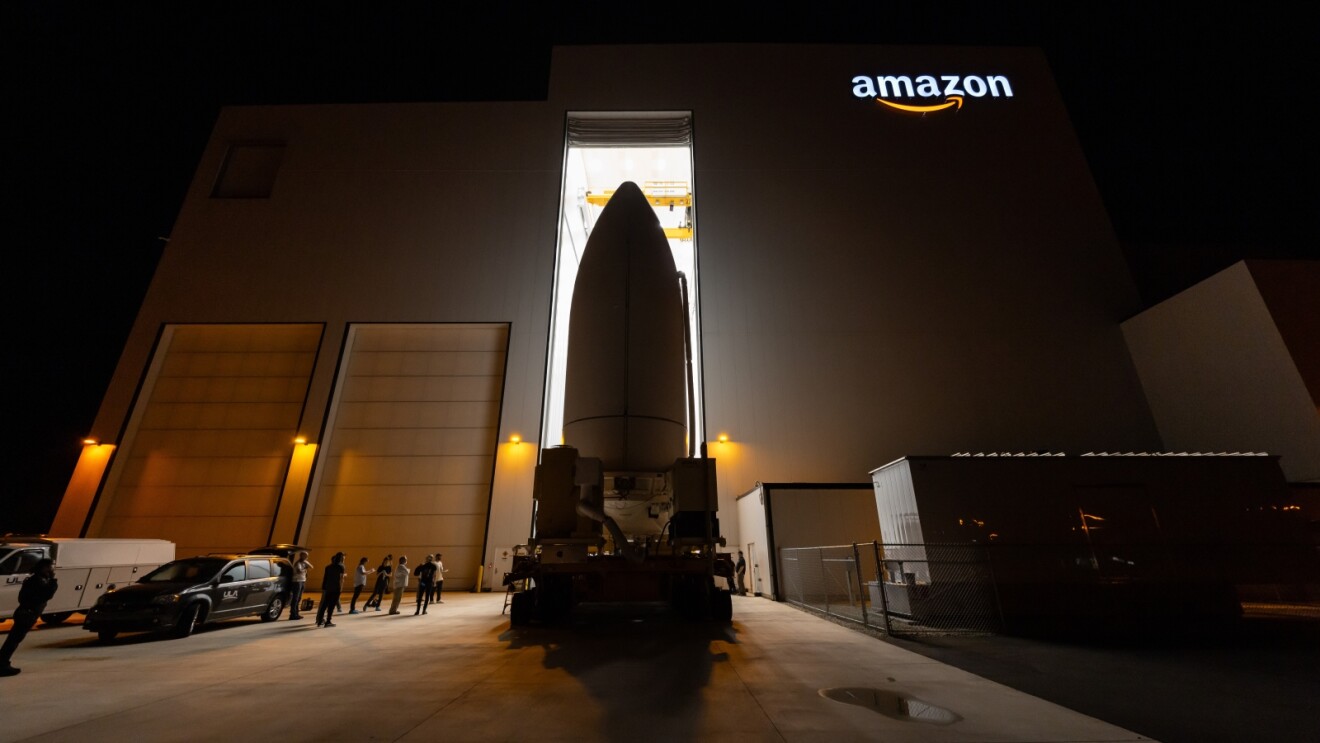
The initial satellite constellation will include more than 3,200 satellites, which began deploying on April 28, 2025 with its first operational launch. That initial launch consisted of 27 production satellites and was carried out by a United Launch Alliance Atlas V rocket, according to the United Launch Alliance. The launch took place from Cape Canaveral Space Force Station in Florida.
There are currently 78 Kuiper satellites in orbit, after three successful launches in less than three months. Amazon is continuing to increase its production, processing and launch rates ahead of an initial service rollout.
…………………………………………………………………………………………………………………………………………………………………………………………………………
In the coming years, LEO satellite services powered by Project Kuiper will replace NBN’s current geostationary orbit Sky Muster satellite service. The company plans to maintain and operate its two geostationary Sky Muster satellites until the transition to the Project Kuiper satellite network is complete. This will ensure continuity for customers in regional, rural, and remote parts of Australia who rely on satellite telecommunications. However, the two Sky Muster satellites are expected to remain operational until approximately 2032.
The agreement between NBN and Amazon is expected to introduce competition to the LEO-based satellite internet services market, particularly in regional Australia. Currently, Starlink dominates this market as the only LEO satellite operator. As of April 2025, Starlink claimed to have more than 350,000 customers in Australia.
Telecom analyst Paul Budde told Reuters that NBN’s decision to partner with Amazon was probably influenced by the need to limit sovereign risk arising from giving control of essential Australian infrastructure to a company aligned with “a very unpredictable America. I am sure total dependence on Starlink would not be seen as a favorable situation,” he added.
Ellie Sweeney, Chief Executive Officer at NBN Co, said:
“LEO satellite broadband, supplied by NBN Co and powered by Amazon’s Project Kuiper, will be a major leap forward for customers in parts of regional, rural and remote Australia.
“This important agreement will complement our other major network upgrades that have involved the rollout of full fibre services across much of our fixed line network and the deployment of the latest 5G millimeter wave technology to improve the speed and capacity of our fixed wireless network.
“Australians deserve to have access to fast, effective broadband regardless of whether they live in a major city, on the outskirts of a country town or miles from their nearest neighbor. That’s what NBN was set up to deliver. By upgrading to next generation LEO satellite broadband powered by Project Kuiper, we are working to bring the best available technology to Aussies in the bush.
“Transitioning from two geostationary satellites to a constellation of Low Earth Orbit satellites will help to ensure the nbn network is future-ready and delivers the best possible broadband experience to customers living and working in parts of regional, rural and remote Australia.
“We plan to bring faster, lower latency broadband to Australians living and working in regional, rural and remote areas, enabling their ongoing participation in the economy for work, study, telehealth, streaming entertainment and connecting with family and friends.
“This new LEO service will eventually replace our geostationary satellites, and we are committed to working with regional communities to ensure we provide continuity of service and make the transition as smooth and seamless as possible.”
Rajeev Badyal, Vice President, Technology at Amazon’s Project Kuiper, said:
“We’ve designed Project Kuiper to be the most advanced satellite system ever built, and we’re combining that innovation with Amazon’s long track record of making everyday life better for customers. We’re proud to be working with NBN to bring Kuiper to even more customers and communities across Australia and look forward to creating new opportunities for hundreds of thousands of people in rural and remote parts of the country.”
References:
https://www.lightreading.com/satellite/nbn-amazon-deal-to-bring-project-kuiper-to-australia-by-2026
https://www.aboutamazon.com/news/innovation-at-amazon/project-kuiper-satellite-internet-first-launch
Amazon launches first Project Kuiper satellites in direct competition with SpaceX/Starlink
Vodafone and Amazon’s Project Kuiper to extend 4G/5G in Africa and Europe
Amazon to Spend Billions on 38 Space Launches for Project Kuiper
Telstra selects SpaceX’s Starlink to bring Satellite-to-Mobile text messaging to its customers in Australia
GEO satellite internet from HughesNet and Viasat can’t compete with LEO Starlink in speed or latency
FCC: More competition for Starlink; freeing up spectrum for satellite broadband service
One thought on “NBN selects Amazon Project Kuiper over Starlink for LEO satellite internet service in Australia”
Leave a Reply to Alan Weissberger Cancel Reply

Dec 30, 2025 Update:
Amazon’s satellite broadband ambitions progressed this year as the company officially fired its first satellites into orbit, firmed up deployment partnerships, won millions in preliminary grants from the BEAD program and began shipping terminals. Formerly called Project Kuiper, the satellite arm of Amazon also got a new name in November: “Leo.”
“Like most early Amazon projects, the program needed a code name, and the team began operating as ‘Project Kuiper’—inspired by the Kuiper Belt, a ring of asteroids in our outer solar system …Now, we’re ready to share our permanent brand for the program: Amazon Leo, a simple nod to the low Earth orbit satellite constellation that powers our network,” wrote Rajeev Badyal, vice president of Amazon Leo, in a blog post about the name change.
Amazon Leo has more than 150 satellites in orbit, compared to Starlink’s 8,000+. Starlink also claims over 8 million global subscribers.
Amazon is supposed to meet an FCC deadline of having half of its full constellation – so, roughly 1,600 of 3,236 satellites – in orbit by July 2026. But the company is unlikely to come near that goal and is expected to file for a deadline extension with the FCC.
As Bloomberg reported in April, Amazon’s satellite launches have been set back in part by a lack of adequate launch infrastructure.: “Amazon has booked billions of dollars’ worth of rockets built by ArianeGroup, Jeff Bezos’s Blue Origin, ULA and SpaceX. But most of those vehicles are still in development or not being built as quickly as Kuiper brass and the companies expected,” according to Bloomberg.
Regardless, Amazon’s slow rollout has not stopped a variety of firms from forming partnerships with the nascent satellite provider. JetBlue was the first airline to announce a partnership with Amazon to deploy its satellite service for in-flight Wi-Fi, beginning in 2027. Amazon has also inked partnerships with Hunt Energy Network, based in Dallas, and agricultural connectivity solutions provider Connected Farms.
In August, Amazon announced a deal with Australia’s NBN to enable the government-owned wholesale broadband operator to sell Amazon Leo satellite connections to more than 300,000 customers across regional, rural and remote parts of Australia. NBN said that Amazon expects to launch Project Kuiper in Australia by mid-2026.
Amazon has further firmed up Leo distribution agreements with DIRECTV Latin America and Sky Brasil, which will offer its connectivity services to households in Argentina, Brazil, Chile, Colombia, Ecuador, Peru and Uruguay. The company also announced an agreement with Vanu Inc., to deliver connectivity to rural Africa.
Moreover, despite not existing yet as a commercial service Amazon’s Leo picked up over $210 million in preliminary awards through the US federal government’s BEAD program, to deliver service to over 321,500 locations, according to a BEAD tracker from Connected Nation. (The other LEO provider in the mix, SpaceX’s Starlink, comparatively, won $670.4 million to reach over 426,000 locations.)
Closing out 2025, Amazon tip-toed closer to the launch of its Leo service. In late November, the company announced the debut and initial trials of Leo Ultra, a new enterprise-grade terminal offering download speeds of up to 1 Gbit/s and upload speeds up to 400 Mbit/s. The company said in a blog that it has begun shipping Leo Ultra, as well as Leo Pro units (designed for 400 Mbit/s download), to “select companies as part of this new enterprise preview” and that it will “expand the program to more customers as we add coverage and capacity to the network.”
https://www.lightreading.com/satellite/looking-ahead-here-comes-amazon-leo-