

Virtualization’s role in 5G Advanced (3GPP Release 18) and a proposed new hardware architecture
Disclaimer: The author used Google Gemini to provide research contained in this article.
In a February 9, 2026 article, Ji-Yun Seol, Executive VP and Head of Product Strategy, Networks Business at Samsung, says: “The evolution from 5G to 5G-Advanced and 6G hinges on three interconnected pillars: virtualization for flexible networks, AI integration across all network layers, and automation towards autonomous networks.”
As the IEEE Techblog has extensively covered both AI RAN and the use of AI in 6G (IMT 2030), this post focuses on the role of virtualization in 5G Advanced.
In 3GPP Release 18 (5G-Advanced), virtualization is the foundational technology that enables several “software-defined” breakthroughs. 3GPP Release 18 components) have already been submitted to ITU-R WP 5D for inclusion in the next revision of ITU-R M.2150. Any remaining technical issues and the final decision for publication of ITU-R M.2150-3 are expected to be resolved during the WP 5D meeting concluding in Feb 2026.
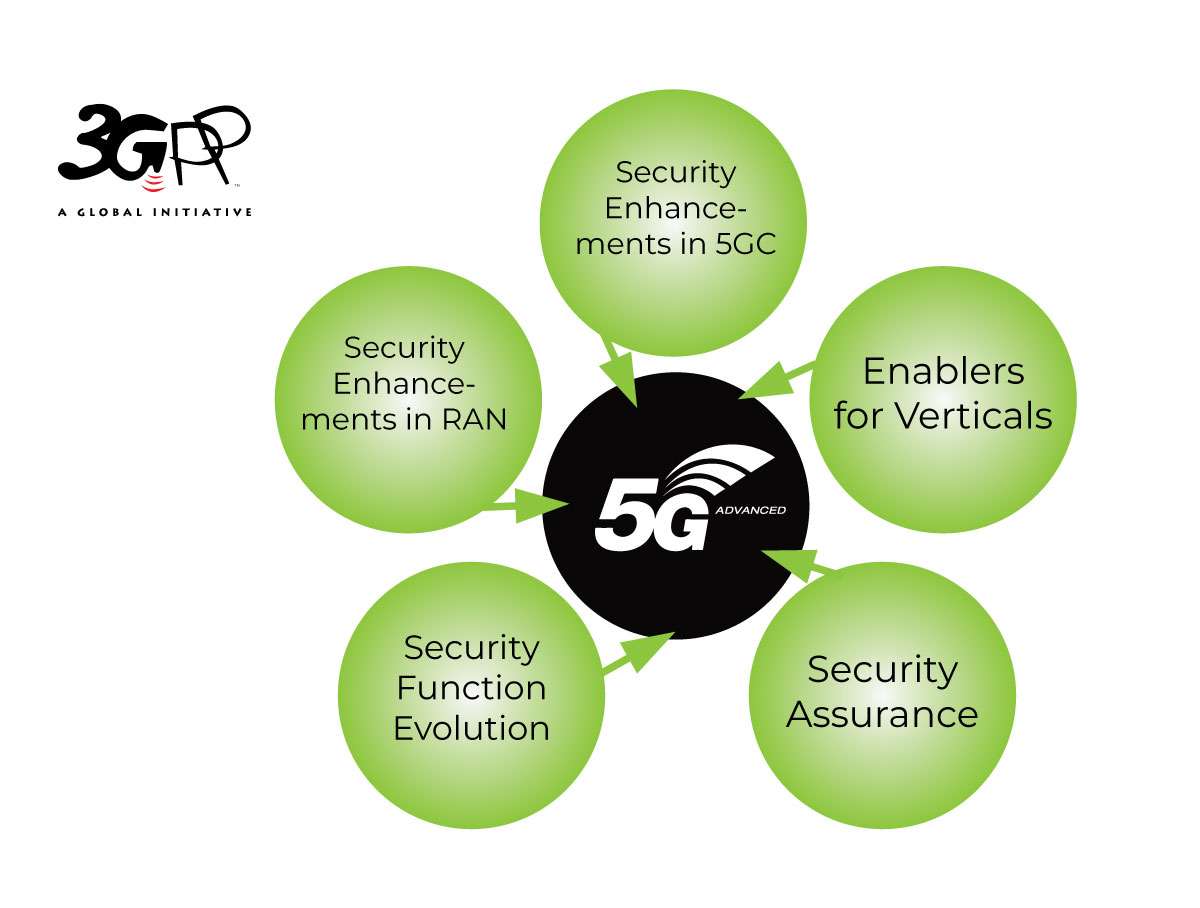
3GPP Rel 18 features that depend most heavily on a virtualized, cloud-native architecture include:
- Host AI Models: Run complex machine learning algorithms for channel state information (CSI) feedback, beam management, and positioning.
- Automate Optimization: Enable “zero-touch” operations where the network dynamically adjusts power and resource allocation based on predictive traffic patterns.
While slicing existed in earlier releases, 5G-Advanced introduces more sophisticated, automated management. Virtualization is critical for:
Dynamic Resource Partitioning: Using Cloud-native Network Functions (CNFs) to create dedicated virtual networks on demand for specific use cases like Public Safety or industrial automation.
- SLA Assurance: Automatically scaling virtual resources to guarantee the ultra-low latency required for high-bandwidth applications like XR (Extended Reality).
To support lightweight headsets, 5G-Advanced relies on split-rendering.
- Edge Cloud Dependency: Virtualization allows heavy graphical processing to be moved from the headset to a virtualized Edge Cloud. This requires a highly agile, virtualized edge infrastructure to maintain the near-zero delay needed for immersive experiences.
- Infrastructure Visibility: New protocols provide the 3GPP layer with direct visibility into the underlying virtualized platform to detect vulnerabilities in the software-defined infrastructure.
Virtualization enables “self-organizing networks” (SON) where network entities can self-configure.
- Lifecycle Management: Standardized solutions in Rel-18 allow for the automated downloading, activation, and testing of software across virtualized network functions (VNFs).
| Feature | Primary Virtualization Dependency |
|---|---|
| AI/ML for RAN | Hosting and training models on COTS hardware |
| Edge-Based XR | Offloading computation to virtualized edge nodes |
| Automated Slicing | Rapid instantiation of CNFs for specific “slices” |
| Net Energy Saving | Software-driven power-down of virtual resources |
………………………………………………………………………………………………………………………………………………………………………………………………………………………………….
On the hardware side, traditional telecommunications infrastructure was defined by a tight coupling of network functions to proprietary, purpose-built hardware—resulting in siloed environments where routers, baseband units, and security appliances existed as distinct physical appliances. While providing reliable performance, this monolithic model introduced limitations in scalability, creating high demands for space, power, and capital expenditure for functional upgrades.
Virtualization transforms this paradigm by decoupling network functions from dedicated hardware, deploying them as software-defined workloads on commercial off-the-shelf (COTS) servers. This shift toward general-purpose compute platforms drives operational efficiency, enhances flexibility, and enables AI readiness. The industry adoption followed a staged evolution: starting with the virtualization of core networks—migrating packet gateways and subscriber databases to standard servers—followed by Virtualized RAN (vRAN), which disaggregates baseband processing from radio hardware to operate as cloud-native software.
In 5G-Advanced (Release 18), the hardware shifts from proprietary “black boxes” to a disaggregated architecture of General-Purpose Processors (GPPs) and Specialized Accelerators.
The physical infrastructure required to run these virtualized functions generally falls into three categories:
Virtual Network Functions (VNFs) and Cloud-native Functions (CNFs) run on Commercial Off-The-Shelf (COTS) servers designed for high-density environments.
- Processors: Typically
Intel Xeon Scalable or AMD EPYC processors with high CPU core counts (up to 48+ cores) to handle parallelized workloads.
- Memory: Large-scale deployments require 384GB to over 1TB of DDR4/DDR5 RAM to support multiple network “slices” simultaneously.
- Form Factor: Short-depth chassis (300mm to 600mm) to fit into standard telco racks or outdoor cabinets at the network edge.
- Inline vs. Lookaside:
- Lookaside: The CPU sends specific tasks (like Forward Error Correction) to the card and gets them back.
- Inline: The entire L1 data flow passes through the accelerator, reducing the load on the CPU and improving power efficiency.
- Chips: These cards use FPGAs (Field Programmable Gate Arrays), ASICs (Application-Specific Integrated Circuits), or GPUs.
- GPU Integration: Platforms like NVIDIA Aerial use GPUs to accelerate both 5G signal processing and AI workloads on the same hardware.
- DPUs (Data Processing Units): Used to offload networking and security tasks, ensuring that data moves between the radio and the virtualized core with sub-microsecond precision.
| Hardware Component | Function in 5G-Advanced |
|---|---|
| COTS Servers | Host virtualized core and RAN software (vCU, vDU) |
| L1 Accelerators | Handle compute-heavy signal processing (Beamforming, MIMO) |
| SmartNICs / DPUs | Manage high-speed data transfer and timing synchronization |
| GPUs | Power the AI/ML models for network optimization and XR rendering |
…………………………………………………………………………………………………………………………………………………………………..
References:
https://www.3gpp.org/specifications-technologies/releases/release-18
Samsung: Turning legacy infrastructure into AI-ready networks
Dell’Oro: Analysis of the Nokia-NVIDIA-partnership on AI RAN
RAN silicon rethink – from purpose built products & ASICs to general purpose processors or GPUs for vRAN & AI RAN
Comparing AI Native mode in 6G (IMT 2030) vs AI Overlay/Add-On status in 5G (IMT 2020)