

Cell Towers
Analysis: Cell Tower Companies (towercos) & market forecast with small cells in the lead
Over the last few years, mobile network operators all over the world generated cash to fund their 5G buildouts by selling cell towers [1.]. Private equity has also entered the market in this period, and consolidation is expected to continue. There are hundreds of smaller tower companies that could be aggregated into a company that could rival American Tower, if the private equity firms have a strong desire to invest in them. They certainly have deep enough pockets.
Tower assets are monetized over multiple decades, in which the value is derived from the sum of its parts, rather than individual locations. Because of this, the average revenue per tower is surprisingly low on an annual basis.
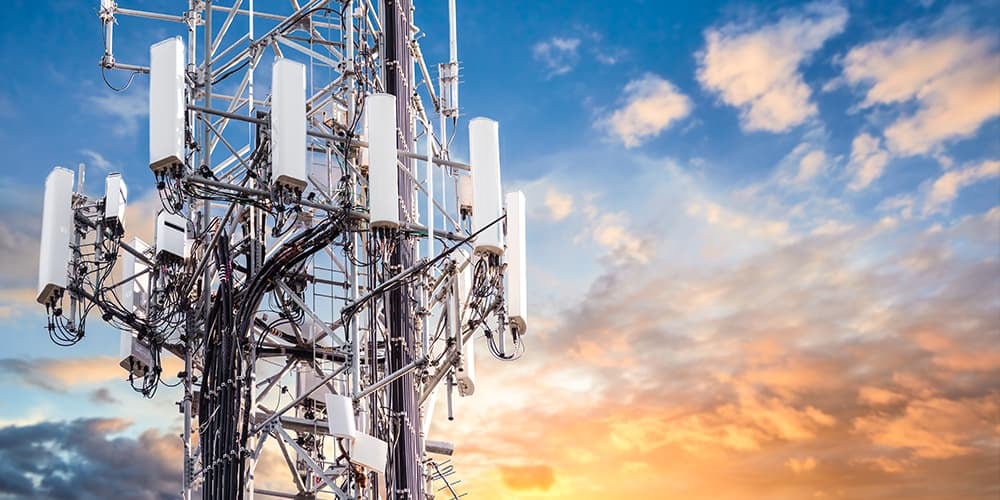
Note 1. Cell Towers are telecommunications sites capable of transmitting 4G and 5G “New Radio” signals for wide-area coverage. They are typically 50 to 200 feet tall and designed to blend into the natural environment to limit the aesthetic impact. 5G cell towers use a combination of low, mid, and high-frequency bands for various connectivity use cases. For example, macrocell antennas can be installed on towers to efficiently deliver low-frequency cellular coverage to millions of devices over a large region. Low-band 5G can travel far distances and penetrate walls, windows, and other physical barriers.
…………………………………………………………………………………………………………………………………………………………………
RAN Research expects the number of cell towers to increase, yet the revenue generated per tower is projected to decline. For the towercos that post public data, the highest results are: ~$7,000 for China Tower, ~$13,000 for Indus Towers, to over $70,000 for American Tower. However, these headline public figures only scratch the surface. The reality is far more complex: utilization varies dramatically, portfolios are a mix of owned and leased assets, and amortization reshapes how these towers should be valued. A $70,000 annual return, for example, is actually more like $1.4 million over a 20-year lifecycle.
The market research firm expects total annual tower revenue to reach $173.83 billion in 2031, up from roughly $120–$130 billion in 2026. While top-line revenues are climbing due to higher lease rates, the physical asset market (hardware and construction) is growing at a more measured pace—rising from $30.07 billion in 2026 to $34.3 billion by 2031 at a 2.67% Compound Annual Growth Rate (CAGR). This disparity highlights a major industry shift: the market is transitioning from rapid greenfield building toward maximizing co-location leasing, structural density, and secondary infrastructure monetization.
RAN Research’s analysis is based on determining an average revenue per tower in each of the regions and then applying this to the number of towers. It is focused on the large towers that support the wide area footprint of the macro cell network. Asia is the biggest market, the firm says.
………………………………………………………………………………………………………………………………………………………………
The top 10 cell tower companies worldwide operate millions of macro sites combined. Led by state-backed giants and massive independent multinational operators, the largest owners include:
- China Tower: The world’s largest cellular tower company, managing roughly 2.15 million sites exclusively across China.
- Indus Towers: Based in India and majority-owned by Bharti Airtel, operating over 259,000 towers.
- Altius (Brookfield-owned): A major Indian infrastructure operator managing around 257,000 sites.
- Summit Digitel: A massive digital communications infrastructure provider operating heavily in India with over 150,000 sites.
- American Tower Corporation (AMT): Headquartered in Boston, the largest international and independent tower real estate investment trust (REIT), managing nearly 149,000 sites across the U.S., Latin America, Europe, and Africa/APAC.
- Cellnex Telecom: Europe’s leading independent wireless telecommunication operator, managing over 100,000 to 138,000 infrastructure sites across 12 European nations.
- BSNL Tower Corporation: A state-backed Indian tower operator controlling tens of thousands of communication sites.
- edotco Group: A pan-Asian regional tower infrastructure company owned by Axiata Group, operating over 50,000 sites across 9 countries.
- Vantage Towers: A prominent European tower infrastructure company spun out of Vodafone, managing upwards of 45,000 sites.
- Crown Castle: A major U.S.-focused infrastructure provider owning over 40,000 towers alongside an extensive footprint of small cells and fiber routes.
………………………………………………………………………………………………………………………………………………………………………..
Market Size & Projections (2026–2031) via Google Gemini:
| Market Layer / Sub-Sector | 2026 Valuation | 2031 Projected Valuation | CAGR | Primary Growth Catalyst |
|---|---|---|---|---|
| Global TowerCo Leases & Revenue | ~$135 Billion | $173.83 Billion | ~5.2% | Skyrocketing data consumption and Multi-tenant leasing |
| Physical Tower Assets & Hardware | $30.07 Billion | $34.30 Billion | 2.67% | Urban infill, macro-to-small cell handoffs |
| U.S. 5G Cell Towers Only | $7.80 Billion | $13.50 Billion | 11.6% | Mid-band spectrum densification, C-band rollouts |
| Tower Power Infrastructure | $6.70 Billion | $10.55 Billion | 9.53% | Off-grid expansions, hybrid lithium-ion & solar swaps |
-
- 5G Standalone (SA) and Mid-Band Densification: The 2026–2031 window marks the peak expansion of 5G Standalone networks. Unlike early 5G, mid-band and millimeter-wave frequencies require dense infrastructure setups, compressing typical urban inter-site distances to under 0.5 miles.
- The Independent TowerCo Oligopoly Model: Telecom operators are aggressively divesting their physical tower portfolios to free up capital for spectrum licenses and core software upgrades. Independent TowerCos (like American Tower and Cellnex) are absorbing these sites, immediately optimizing them by adding multiple tenants per pole.
- Infrastructure Sharing (Co-location): To defend profit margins against heavy capital expenditures, operators are increasingly abandoning proprietary towers in favor of neutral host infrastructure sharing. Increasing the co-location ratio heavily expands TowerCo revenue without the cost of building new physical sites.
-
- Elevated Capital Costs: Higher long-term interest rates have widened bid-ask spreads for infrastructure transactions, making debt-fueled portfolio acquisitions more expensive and delaying consolidation.
- Regulatory Obstacles: Complex permitting timelines and local aesthetic restrictions continue to delay urban site construction, shifting near-term focus toward indoor small cells.
…………………………………………………………………………………………………………………………………..
References:
https://www.anscorporate.com/blog/what-is-a-5g-cell-tower
Cell Tower Forecast 2026-2031 – Rethink
RAN-Research-Cell-Tower-Forecast-2026-2031-Executive-Summary-ec806.pdf
https://www.mordorintelligence.com/industry-reports/small-cell-network-market
SK Telecom inspects cell towers for safety using drones and AI
SK Telecom, South Korea’s largest wireless carrier, announced on Tuesday that it’s developed a new cell tower safety inspection system using drones and image analysis artificial intelligence (AI). The newly-developed image analysis AI model checks the status of nuts and bolts by analyzing images taken by drones.
Cell towers with antennas for sending and receiving telecommunications signals are installed across the country, with their maximum height estimated at 75 meters. Since cell towers require regular maintenance to prevent accidents that can be caused by deterioration such as corrosion or loosening of nuts and bolts, specialized personnel had to climb them to inspect their condition with their bare eyes.
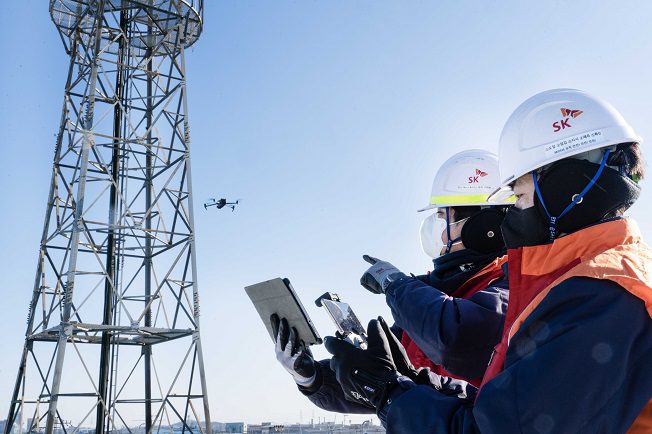
Engineers from a subsidiary of SK Telecom Co. inspect a cell tower in this photo provided by the wireless carrier on Jan. 31, 2023.
…………………………………………………………………………………………………………………………………………….
Now with an intelligent safety inspection system in place, not only can SK Telecom prevent accidents due to aging cell towers, but it can also ensure the safety of workers by minimizing the need to go up the cell towers. Moreover, the company can drive up work productivity through the application of an AI model that automatically identifies defects by analyzing images taken by drones.
Previously, safety inspectors had to study around 100 images to complete the inspection of one cell tower by inspecting multiple images taken by drones. With the adoption of the new AI analysis model, SK Telecom has been able to reduce the time required for the process by 95%, while increasing the reliability and consistency of the analysis results.
The company says, going forward, it will enhance the system even further by adding inspection items such as wind pressure safety/inclination. It will also look to improve the AI model and link the application with the safety management system.
In addition to drone-based cell tower inspections, the telecom company is actively applying AI to other areas of its network, including equipment error/anomaly detection, power cost reduction, and work completion inspection.
Park Myung-soon, SKT’s vice president and head of Infra DT Office, said: “By building an intelligent safety inspection system that can complement the existing visual inspection, we have secured greater safety for workers. We will continue to make efforts to achieve AI transformation of our telecommunication networks, while focusing on developing our field workers into experts who can develop and operate AI.”
References:
http://koreabizwire.com/sk-telecom-inspects-cell-towers-using-drones-and-ai/239441
South Korean telecom giant innovates safety inspection with drones
US Cellular touts 5G millimeter wave and cell tower agreement with Dish Network
US Cellular is investing in network modernization, 5G, and spectrum assets. Laurent Therivel (LT), the company’s President & Chief Executive Officer said during their 1st Quarter 2021 earnings call that US Cellular is focusing on low band and millimeter wave spectrum for 5G. Their initial deployment is in clean, low band spectrum. “US Cellular 5G is available to some degree in 18 states today,” LT said.
The company is satisfied with their C band spectrum purchases, especially when combined with their CBRS holdings. Mid-band spectrum is available in nearly all of US Cellular’s “operating footprint.”
Millimeter wave spectrum has been deployed to offer fixed wireless access in three test markets pilot launch in those markets is expected to occur in the third quarter of this year. LT expanded on millimeter wave:
“We need to be optimistic on the performance capabilities of millimeter wave spectrum. We recently performed additional millimeter wave spectrum testing the base station and radio enhancement we achieved a line of sight propagation distance of the 7 kilometers with average speeds, approaching 1 gigabit per second this exceeds our results from last year where we achieved this the 5 kilometers of average speed with 100 megabits per second.”
Strategic partnerships were said to be an area of opportunity to better leverage the value of US Cellular assets. In April, US Cellular signed a Tower MLA (master lease agreement) with Dish Network. The company expects “this agreement to contribute to our tower revenue growth beginning in 2022.” However, any details on the deal have to remain confidential, LT said. US Cellular recently hired Austin Summerford to oversee its cell towers strategy.
US Cellular CFO Douglas Chambers highlighted the importance of the Towers MLA with Dish Network:
“The control of our towers remains very important. By owning our towers we ensure we maintain the operational flexibility to add new equipment to make other changes to our cell sites without incurring additional costs which is very important, particularly given our current technology evolution. As you can see on the slide with the assistance of our third -party marketing agreement, we have seen steady growth in tower rental revenues. As I mentioned first quarter tower rental revenues increased by 9% year-over-year. As LT noted earlier, new master lease agreement we signed with DISH Wireless and we will continue to focus on growing revenues from these strategic assets.”
In answer to a Morgan Stanley analyst question about growth drivers, LT again alluded to the towers deal with Dish (grammar corrections):
‘The best thing we did is, we said look, we’ve got assets in those towers in the form of generators, shelters and backhaul and we’re willing to share that with our partners if the economics makes sense. We’ve taken those actions. I think the DISH deal is the first example of those actions bearing fruit, and I expect to see more. So, I hope that gives you some flavor about how we’re doing from a growth perspective. I’m encouraged — I expect to see those efforts continue to bear fruit; certainly throughout the rest of this year and particularly going into next.”
“We still see significant unrecognized market value in the [US Cellular] towers,” stated financial analysts at Raymond James in a May 10th note to clients. US Cellular owned 4,270 towers at the end of the 1st quarter of 2021. Analyst Ric Prentiss wrote that Raymond James does not expect an outright sale of US Cellular towers, which is a question that has come up repeatedly in the past. Operationally, the company’s 4,300 tower portfolio produced $20.3 million in third-party revenue in the 1st quarter of 2021.
“Importantly, USM announced it has had signed a Master Lease Agreement (MLA) with Dish in April, and as Dish ramps the deployment of its greenfield nationwide 5G network in 2H21/2022, USM should see some upside. Moreover, USM under new (as of July 2020) CEO Laurent Therivel (LT) has focused on ‘sweating’ the tower assets, including more aggressive marketing, faster application cycle times, and sharing backhaul/generators/shelters at tower sites with tenants,” Prentiss stated.
US Cellular is somewhat unique in the U.S. wireless industry because it owns thousands of cell towers. Most wireless network operators like Verizon and AT&T have sold off most of their towers and now primarily rent space on towers owned by other companies like Crown Castle.
Image credit: Pixabay
…………………………………………………………………………………………………………………………………………
US Cellular reported total operating revenues of around $1 billion, up from the $963 million it reported in the same quarter a year ago. US Cellular ended the period with roughly 5 million total wireless subscribers, which was a subscriber net loss of 6,000. Smartphone connections increased by 15,000 during the quarter and by 56,000 over the course of the past 12 months. There were lower additions of Internet products such as hotspots and routers compared to the prior year when there was an increase in demand due to COVID 19.
…………………………………………………………………………………………………………………………………………..
Dish Network and Cell Towers:
To comply with Dish Network’s 2019 agreement with the U.S. Department of Justice, Dish is to cover 20% of the U.S. population by June 2022 with 5G, and 70% by June 2023. It will need to do so via thousands of cell towers across the country. Dish has already signed agreements with a wide variety of cell tower companies, including Crown Castle, American Tower, Vertical Bridge among others.
New Street Research analysts wrote in a note to clients this week:
“Between cash on hand and ongoing cash generation, the company has all the resources it needs to fund the early stages of the network buildout. The company will need to raise more capital to fully fund the build, but they will likely do that after proving out their technology platform and its commercialization, starting with its [5G] deployment in Las Vegas later this year.”
The majority of cell towers in the U.S. are owned by three cell tower companies:
- American Tower 40,586
- Crown Castle 40,567
- SBA Communications 16,401
………………………………………………………………………………………………………………………………………
References:
https://www.lightreading.com/5g/dish-teams-with-uscellular-for-5g-towers/d/d-id/769381?
https://www.fiercewireless.com/operators/uscellular-touts-tower-deal-dish