

Amazon Sidewalk
Semtech LoRa® PHY technology enables Amazon Sidewalk to expand while supporting fixed and mobile IoT endpoints
Introduction:
Semtech Corporation, a leading provider of high-performance semiconductor, Internet of Things (IoT) systems and cloud connectivity service solutions, is the creator and primary owner of the intellectual property (IP) for LoRa® technology, providing the Physical layer chips (PHY transceivers) used in LoRaWAN – the very popular Low Power Wide Area Network (LPWAN) for IoT endpoints.
The Camarillo, CA based company last week announced that LoRa® technology will continue to serve as the core radio modulation for Amazon Sidewalk across all markets in this year’s Sidewalk international expansion. Sidewalk’s global expansion officially begins in Canada and Mexico with further expansion to other international regions is scheduled for later in 2026. The network is projected to expand to over 30 new countries by year’s end.
Amazon Sidewalk is increasingly viewed as a commercial success in terms of infrastructure deployment and technical capability, transitioning from a niche smart home feature to a broad, LoRa-based Low Power Wide Area Network (LPWAN). While it faced initial skepticism regarding privacy and adoption, the network now boasts massive, passive coverage of over 95% of the U.S. population and is undergoing rapid international expansion.
Architectural role of LoRa in Sidewalk:
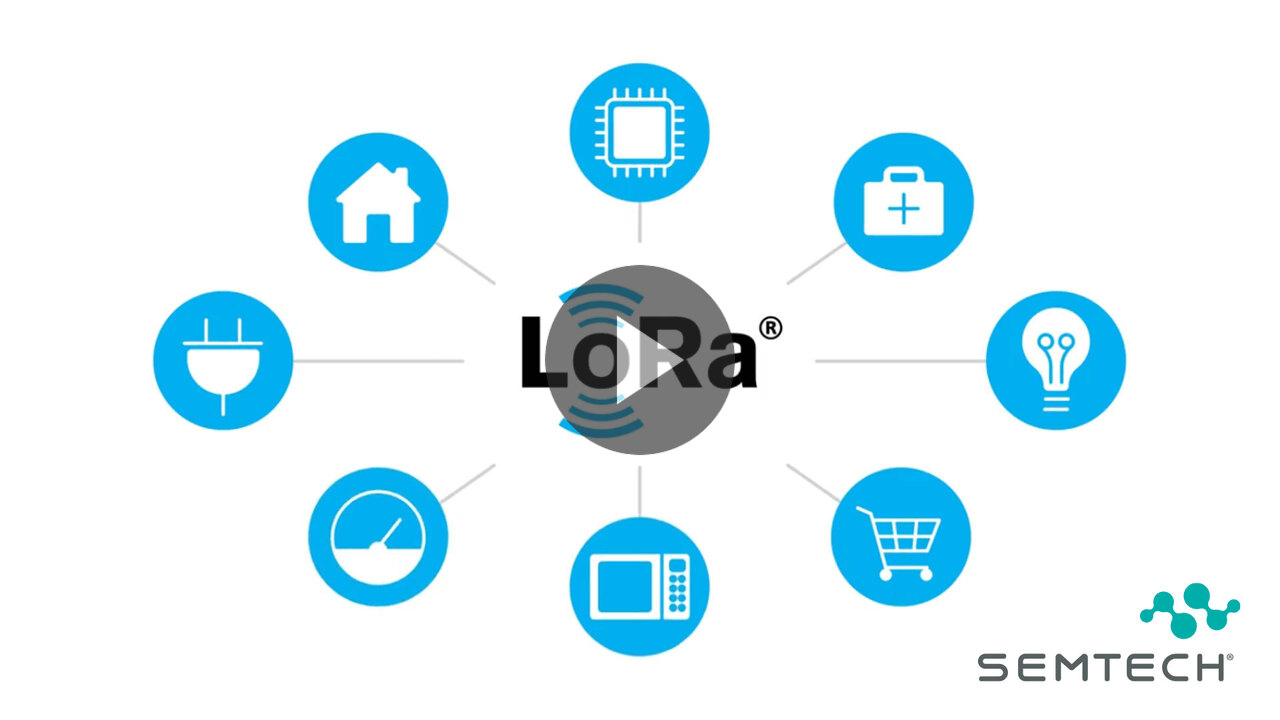
LoRa is the de facto wireless platform of LPWANs for IoT. Semtech’s LoRa chipsets connect sensors to the Cloud and enable real-time communication of data and analytics that can be utilized to enhance efficiency and productivity. LoRa devices enable smart IoT applications that solve some of the biggest challenges facing our planet: energy management, natural resource reduction, pollution control, and infrastructure efficiency.
Amazon Sidewalk aggregates spectrum in unlicensed bands and combines multiple physical layers, with Semtech’s LoRa modulation providing the long‑range, low‑power tier for neighborhood‑scale coverage beyond home Wi‑Fi and short‑range Personal Area Networks (PANs). By using ONLY LoRa as the core wide‑area PHY, Sidewalk evolves from a home‑centric LAN into a geographically distributed WAN that can support both fixed and mobile IoT endpoints across dense residential environments.
Network scale and coverage:
Sidewalk already covers roughly 95% of the U.S. population, making it one of the largest license‑free, consumer‑facing LPWA deployments, and the 2026 roadmap extends the footprint into Canada and Mexico first, followed by additional international markets later in the year. This expansion effectively turns Sidewalk into a multi‑continent overlay network, leveraging existing consumer premises equipment and LoRa‑enabled endpoints to provide persistent connectivity without requiring dedicated operator‑grade RAN build‑outs.
Technology differentiation vs other LPWAN options:
NB-IoT (included in ITU-R M.2150 IMT 2020 RIT/SRIT standard) holds the largest LPWAN share at roughly 54%–58% of total LPWAN connections, due to massive adoption in China which accounts for approximately 84% of all global NB-IoT connections. Outside of China, LoRaWAN is the clear market leader with a 41% share of connections. As of late 2025, there are over 125 million LoRaWAN end devices deployed globally, growing at a 25% annual rate. It is the preferred choice for private IoT networks, specifically in smart buildings, agriculture, and industrial asset tracking.
LoRa’s combination of long range, ultra‑low power operation, and mature ecosystem (silicon, gateways, and cloud stacks) gives Sidewalk a differentiated profile relative to alternatives such as narrowband cellular IoT and other unlicensed LPWAN modulation methods. For Amazon, anchoring Sidewalk on LoRa reduces RF and protocol fragmentation on the end‑device side while preserving flexibility to layer higher‑level Sidewalk services and security on top of the underlying LoRa/LoRaWAN protocol stack.
Market and ecosystem context:
Amazon Sidewalk now sits alongside large industrial and enterprise LoRaWAN networks, reinforcing LoRa’s position as the leading low‑power wide‑area connectivity technology in unlicensed spectrum. The LoRaWAN IoT connectivity market is forecast to grow from about 10.7 billion USD in 2025 to 44.8 billion USD by 2030 (33.1% CAGR), while LoRaWAN deployments have surpassed 125 million devices globally with a 25% CAGR, signaling a robust runway for Sidewalk‑class Massive IoT use cases.
Implications for device and service design:
For device OEMs and service providers, Amazon’s decision effectively de‑risks LoRa as a long‑term connectivity bet for consumer and prosumer IoT, given Sidewalk’s trajectory to tens of millions of active devices worldwide. Vendors integrating LoRa‑based designs can now target both traditional LoRaWAN operator networks and the Sidewalk ecosystem, enabling common hardware platforms to support smart home, safety, environmental monitoring, and asset‑tracking applications at neighborhood and city scale.
LoRa Enables Sidewalk’s Technical Evolution:
Chirp spread spectrum (CSS) modulation in LoRa technology provides the technical foundation enabling Amazon Sidewalk’s new capabilities:
- Enhanced Network Density: LoRa multi-spreading factor capability optimizes longer range and shorter time-on-air, supporting higher device concentrations in urban environments while maintaining reliable connectivity.
- Location-Based Services: Unique location accuracy service that combines the power of Wi-Fi, Bluetooth Low Energy (BLE) and GPS enables a new class of location aware devices that don’t need expensive cellular solutions for asset tracking applications.
- Hub-Less Deployments: Utilized for both out-of-band-diagnostics as well as signaling radio for battery-powered cameras, LoRa lowers the need for hubs/repeaters, reducing infrastructure complexity for consumers while extending effective coverage areas.
Proven Heritage of LoRa in Massive IoT Networks:
Semtech’s LoRa technology has been deployed by more than 170 major mobile network operators globally, with over 500 million connected devices across smart cities, utilities, logistics, unmanned aircraft systems, and industrial applications. This proven deployment heritage provides the technical foundation and ecosystem maturity required for Amazon Sidewalk’s global expansion.
The technology’s long-range capability, extending connectivity up to several kilometers from Sidewalk bridge devices, combined with its ability to penetrate buildings and operate in dense urban environments makes it uniquely suited for neighborhood-scale networks. LoRa provides free, long-range connectivity that consumers can rely on for years of battery-powered operation.
Building on CES 2026 Momentum:
Ring showcased its expanded product portfolio using LoRa at CES 2026, introducing comprehensive sensor families for security, safety and home automation. These products join the growing network of devices powered on Sidewalk, including water leak and freeze detection sensors, wearable devices and environmental monitoring solutions, all leveraging the connectivity advantages of LoRa.
The Sidewalk network’s architecture—combining LoRa for long-range communication with Bluetooth Low Energy for device setup—creates a robust, resilient IoT infrastructure that can scale to support millions of devices while maintaining the ultra-low power consumption critical for battery-operated sensors and cameras.
…………………………………………………………………………………………………………………………………………………………………..
About Semtech:
Semtech Corporation (Nasdaq: SMTC) is a leading provider of high-performance semiconductor, IoT systems and cloud connectivity service solutions dedicated to delivering high-quality technology solutions that enable a smarter, more connected and sustainable planet. Our global teams are committed to empowering solution architects and application developers to develop breakthrough products for the infrastructure, industrial and consumer markets.
Amazon’s Sidewalk Low Power WAN is a dud, despite four announced partnerships
From LPWAN to Hybrid Networks: Satellite and NTN as Enablers of Enterprise IoT – Part 2
Enterprise IoT and the Transformation of UK Telecom Business Models – Part 1
Empowering Low-Power Wide-Area Networks to Meet the IoT Challenge
NTT’s IoT Services for Sustainability supported by new LoRaWAN low power network
IoT for Smart Cities: LoRa with Semtech Silicon as a leading LPWAN
LoRa Alliance and OMS Group integrate smart metering standards which may result in massive scale for IoT
LoRaWAN gains momentum: NEC LoRaWAN server + New Zealand nationwide network
LoRaWAN and Sigfox lead LPWANs; Interoperability via Compression
New LoRaWAN™ network for IoT in Saudi Arabia from Actility and machinestalk
LPWAN to Application standardization within the IETF