

Will 2026 be the “Year of the AI Ontology” for telecoms?
Overview:
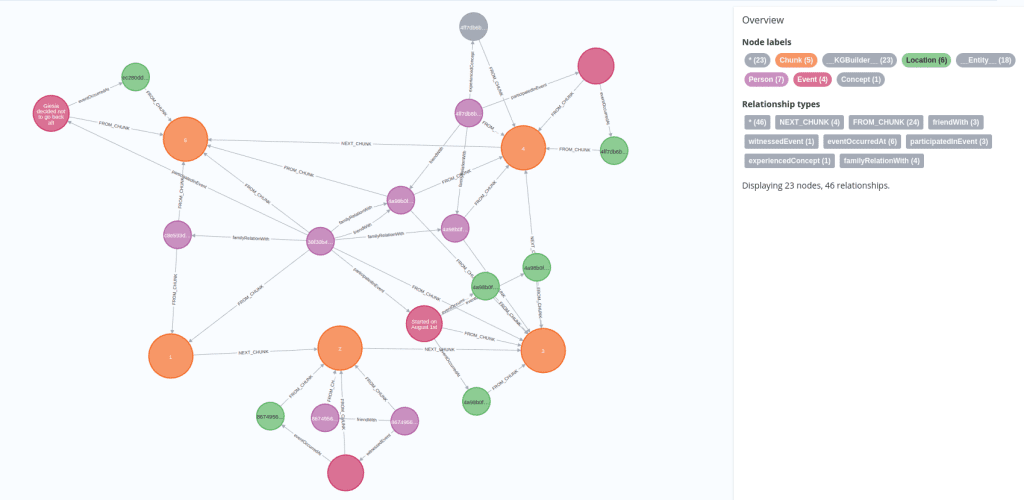
For the telecommunications industry, many pundits say 2026 will be the year of “AI Ontology [1.],” primarily because a standardized knowledge plane is now seen as the “ultimate driver” for reaching higher levels of network autonomy. Industry experts from companies like Telstra and Amdocs emphasize that for agentic AI to move from isolated pilots to enterprise-scale operations, it requires a structured, explainable, and typed world model—an ontology—to unify data across fragmented systems.
Note 1. An ontology in AI is a formal, machine-readable framework that defines the concepts, properties, and relationships within a specific domain to enable knowledge sharing, reasoning, and semantic understanding. It structures data into a network of “things” (classes) rather than just files, acting as a “Rosetta stone” that allows AI systems to understand context, infer conclusions, and act on data.
…………………………………………………………………………………………………
Several network providers are adopting a “standardized, ontology-driven knowledge plane” to enable agentic AI to operate across traditionally siloed network systems. This shift in 2026, is driven by the need for Level 4 and 5 network autonomy, where agents require a common language to reason about network states and business intents.
1. Mark Sanders, Telstra’s chief architect, talked about the emergence of a structured, explainable knowledge plane that removes silo barriers between agents, freeing them up to become the workhorses of network automation. “We think for the autonomous network to reach level four or five is going to require a standardized, ontology-driven approach on the knowledge plane,” said Sanders at a recent Ericsson conference, touting this approach as the ultimate driver in next-level autonomous networks.
2. For BT, agentic AI is already yielding tangible results in IT service desks, especially as organizations shift from assistance to execution, according to Girish Mahajan, senior leader for mobile AI data/automation. In particular, AI agents have reduced trouble ticket resolution times. “It has reduced the time of the manual effort, and it has also increased efficiency of the service desk,” he said. However, same autonomy that drives value also introduces unpredictability.
“The outcome of agentic AI is something unpredictable because it’s continuously adapting during execution,” he said, adding a call for better design principles. “We need reflection-based architecture, and we need better AI/human collaboration. AI agents should learn from their actions and should work along with humans in their day-to-day.”
3. For Vodafone, work has revolved around lighthouse projects: small-scale efforts to demonstrate the value of a larger business use case.
“It’s quite a mundane use case around energy cost recovery. So obviously, energy is a huge operational expense for our industry,” said Simon Norton, digital/OSS engineering director, Vodafone Group. “It’s very complex, especially when you’re working in that multi-market environment, to manually compare line by line with energy bills against your own data sets.”
Vodafone’s AI agents, therefore, have been automatically ingesting bills and comparing them to identify any tariff anomalies.
“It’s mundane but actually super valuable,” said Norton, who stressed operators should find a project with a clear value proposition and get it out into production quickly. “You build the credibility, you start to get the funding into the system, and it buys you the time to work on that longer-term strategy.”
………………………………………………………………………………………..
- From Assistant to Doer: AI is evolving from a “helper” that provides insights to a “doer” that autonomously observes, decides, and executes actions within governed boundaries.
- Multi-Agent Orchestration: 2026 will see the rise of coordinated multi-agent ecosystems. These systems require an ontology to ensure that a “planner agent” can accurately break down goals for specialized “worker agents” without semantic confusion.
- Intent-Based Orchestration: To ensure network stability, telcos are adopting intent-based orchestration layers. These layers use ontologies to provide the deterministic, model-driven framework necessary to ground agent actions in real-world business intent.
- Network Autonomy: CSPs are aiming for TM Forum Level 3 or 4 autonomy by late 2026, using agents to turn intent into outcomes in live networks.
- Operational Leverage: Rather than massive headcount cuts, agentic AI is providing “operational leverage,” allowing teams to manage growing network complexity with the same workforce.
- Measurable ROI: Investments are focusing on high-impact areas like autonomous incident handling (30-40% cost reduction) and predictive maintenance (up to 40% fewer outages).
- Structured Knowledge Plane: Operators are shifting toward a standardized, ontology-driven knowledge plane to remove silo barriers between agents. This allows multiple specialized agents to collaborate on “broader, bigger outcomes” like root cause analysis across billing, CRM, and network systems.
- Enabling Agentic Autonomy: While 2025 focused on “agentic AI” as a buzzword, 2026 is about the foundational infrastructure—specifically graph-based data systems and digital twins—that gives agents the “executable semantics” they need to plan and act safely.
- Unified Truth for Agents: Without a central ontology, horizontal AI platforms often suffer from “agent drift,” where different agents interpret the same business logic (e.g., “unlimited plan”) differently, leading to billing and provisioning errors.
Ericsson’s View:
Hassan Iftikhar, Ericsson’s head of product domain data & analytics, called for better hyperscaler collaboration on scale, foundational cloud, and AI capabilities.
“The AI tooling, the security framework, we use those to industrialize and put agents into production… It’s pretty much an ecosystem that works together,” he said. At the panel, the data head revealed the vendor’s role in the agentic ecosystem through the use case of one operator needing help with catalog management, as well as scarce developer skills.
“They wanted to take the pain out of product configuration. So we designed a multi-agentic system where it basically helps product managers and marketers to configure and publish new instances through an actual language. So very complex catalog engineering, which can take weeks, is reduced to hours where you can search for reuse and launch.”
Iftikhar also revealed an OSS tool to help one operator’s engineers to diagnose and resolve issues within their operational instances – resulting in an agent that was seemingly too autonomous for the client.
“We put this use case together, basically taking an intent from an operations engineer, such as data diagnostics, and into it, we built the ability to take remediation actions automatically. What we sort of decided from that was a bit of a step too far to just throw that to an operations department for it to autonomously take steps. So we actually had to go in and build guardrails to limit that capability to a human oversight capability.”
“I think what we learned is that we have to sort of build that confidence in the team step by step before we can actually go to fully autonomous operation. Our learning from adjusting that use case was to be practical and adapt very quickly to what the business really needs.”
…………………………………………………………………………………
References:
https://www.sdxcentral.com/analysis/has-telco-already-faced-the-year-of-ai-agents/
The Financial Trap of Autonomous Networks: Scaling Agentic AI in the Telecom Core
Telecom operators investing in Agentic AI while Self Organizing Network AI market set for rapid growth
Nokia to showcase agentic AI network slicing; Ericsson partners with Ookla to measure 5G network slicing performance
T-Mobile US announces new broadband wireless and fiber targets, 5G-A with agentic AI and live voice call translation
Ericsson integrates Agentic AI into its NetCloud platform for self healing and autonomous 5G private networks
Agentic AI and the Future of Communications for Autonomous Vehicles (V2X)
AWS to deploy AI inference chips from Cerebras in its data centers; Anapurna Labs/Amazon in-house AI silicon products
One thought on “Will 2026 be the “Year of the AI Ontology” for telecoms?”
Leave a Reply

We concur with this analysis! For AI to move beyond “hype, vibes and vaporware” the industry must establish best practices, standards, data architectures, and ontologies. This article highlights that without these standardized frameworks, telecommunications companies (telcos) cannot accurately model total cost of ownership (TCO) or make effective capital expenditure decisions.