

Blue Origin
Blue Origin announces TeraWave – satellite internet rival for Starlink and Amazon Leo
The BBC reports that Jeff Bezos owned Blue Origin plans to create a new communications network called TeraWave, launching more than 5,400 satellites to offer global internet coverage. TeraWave will be focused on data centers, businesses and governments.
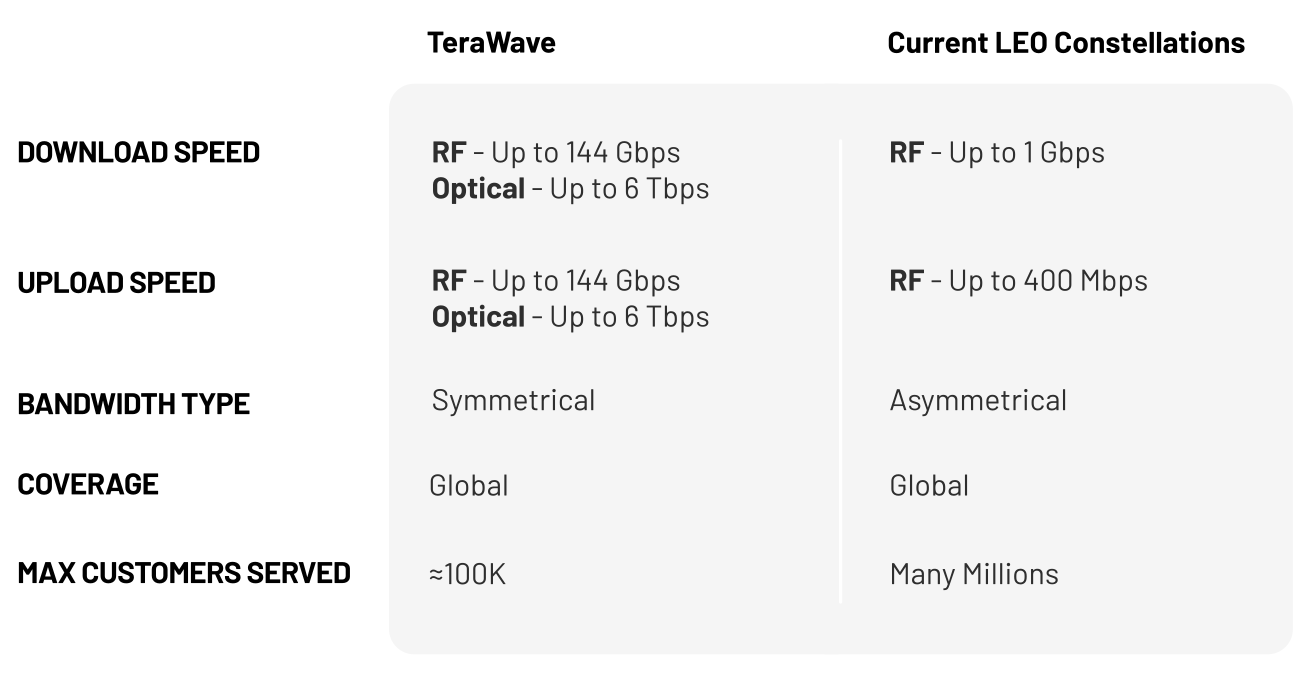
In a satellite internet market dominated by Elon Musk’s Starlink, Blue Origin would still have fewer satellites in orbit than Starlink. Yet TeraWave’s network at maximum speed would allow upload and download speeds of up to 6 terabits per second, much faster than rival commercial satellite offerings. The satellites are set to start launching by the end of 2027.
In April, Blue Origin launched an 11-minute space flight with an all-female crew, including Bezos’ now-wife Lauren Sánchez, singer Katie Perry and CBS presenter Gayle King. However, some commentators said it was “tone deaf” for celebrities to be taking part in such a fleeting and expensive trip at a time of economic struggle.
Blue Origin says TeraWave will be focused on data centers, businesses and governments. Blue Origin said its network, at its fastest, would allow upload and download speeds of as much as 6 terabits per second, much faster than rival commercial satellite services currently offer.
TeraWave is Optimized for Enterprise, Data Center, & Government Customers
- Starlink – part of Musk’s rocket firm SpaceX (which is 40% owned by Elon Musk) is by far the #1 satellite internet and phone service provider, primarily to individual customers.
- Blue Origin’s TeraWave satellite network will also compete with Amazon Leo, but they are targeting different market segments despite both being backed by Jeff Bezos. While it currently has around 180 satellites in orbit, having launched dozens more just last week, it plans to have more than 3,000 in orbit. Like Starlink, Amazon is also more focused on the general public than businesses and governments, positioning Leo as a way to offer high-speed internet access globally. It has not said when all of the Leo satellites will be in orbit.
| Feature | Blue Origin TeraWave | Amazon Leo (formerly Project Kuiper) |
|---|---|---|
| Target Market | Enterprises, data centers, governments, and other high-capacity users. | Consumers and communities in remote and underserved areas. |
| Service Goal | Provide extremely high-speed, symmetrical, and redundant backbone connectivity. | Deliver general high-speed broadband internet access (consumer speeds). |
| Projected Speeds | Up to 6 terabits per second (Tbps) via optical links in MEO. | Up to 1 gigabit per second (Gbps) for its highest-end user terminal. |
| Constellation Size | Plan for 5,408 satellites (LEO and MEO). | Plan for over 3,200 satellites (LEO only). |
In November, Blue Origin successfully landed a rocket booster on a floating platform for the first time. Only SpaceX had previously accomplished that feat.
………………………………………………………………………………………………………………………………………………………………..
References:
https://www.bbc.com/news/articles/cn0yydwe89jo
AST SpaceMobile to deliver U.S. nationwide LEO satellite services in 2026
FCC grants Amazon’s Kuiper license for NGSO satellite constellation for internet services
Amazon to Spend Billions on 38 Space Launches for Project Kuiper
Starlink doubles subscriber base; expands to to 42 new countries, territories & markets
China ITU filing to put ~200K satellites in low earth orbit while FCC authorizes 7.5K additional Starlink LEO satellites
Amazon Leo (formerly Project Kuiper) unveils satellite broadband for enterprises; Competitive analysis with Starlink
Amazon launches first Project Kuiper satellites in direct competition with SpaceX/Starlink
NBN selects Amazon Project Kuiper over Starlink for LEO satellite internet service in Australia
Elon Musk: Starlink could become a global mobile carrier; 2 year timeframe for new smartphones
GEO satellite internet from HughesNet and Viasat can’t compete with LEO Starlink in speed or latency