

Analysis: Cell Tower Companies (towercos) & market forecast with small cells in the lead
Over the last few years, mobile network operators all over the world generated cash to fund their 5G buildouts by selling cell towers [1.]. Private equity has also entered the market in this period, and consolidation is expected to continue. There are hundreds of smaller tower companies that could be aggregated into a company that could rival American Tower, if the private equity firms have a strong desire to invest in them. They certainly have deep enough pockets.
Tower assets are monetized over multiple decades, in which the value is derived from the sum of its parts, rather than individual locations. Because of this, the average revenue per tower is surprisingly low on an annual basis.
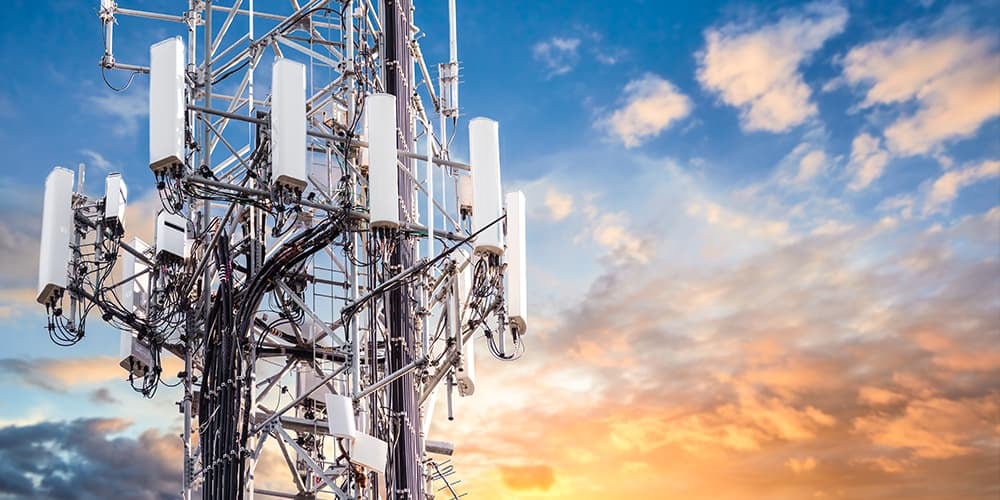
Note 1. Cell Towers are telecommunications sites capable of transmitting 4G and 5G “New Radio” signals for wide-area coverage. They are typically 50 to 200 feet tall and designed to blend into the natural environment to limit the aesthetic impact. 5G cell towers use a combination of low, mid, and high-frequency bands for various connectivity use cases. For example, macrocell antennas can be installed on towers to efficiently deliver low-frequency cellular coverage to millions of devices over a large region. Low-band 5G can travel far distances and penetrate walls, windows, and other physical barriers.
…………………………………………………………………………………………………………………………………………………………………
RAN Research expects the number of cell towers to increase, yet the revenue generated per tower is projected to decline. For the towercos that post public data, the highest results are: ~$7,000 for China Tower, ~$13,000 for Indus Towers, to over $70,000 for American Tower. However, these headline public figures only scratch the surface. The reality is far more complex: utilization varies dramatically, portfolios are a mix of owned and leased assets, and amortization reshapes how these towers should be valued. A $70,000 annual return, for example, is actually more like $1.4 million over a 20-year lifecycle.
The market research firm expects total annual tower revenue to reach $173.83 billion in 2031, up from roughly $120–$130 billion in 2026. While top-line revenues are climbing due to higher lease rates, the physical asset market (hardware and construction) is growing at a more measured pace—rising from $30.07 billion in 2026 to $34.3 billion by 2031 at a 2.67% Compound Annual Growth Rate (CAGR). This disparity highlights a major industry shift: the market is transitioning from rapid greenfield building toward maximizing co-location leasing, structural density, and secondary infrastructure monetization.
RAN Research’s analysis is based on determining an average revenue per tower in each of the regions and then applying this to the number of towers. It is focused on the large towers that support the wide area footprint of the macro cell network. Asia is the biggest market, the firm says.
………………………………………………………………………………………………………………………………………………………………
The top 10 cell tower companies worldwide operate millions of macro sites combined. Led by state-backed giants and massive independent multinational operators, the largest owners include:
- China Tower: The world’s largest cellular tower company, managing roughly 2.15 million sites exclusively across China.
- Indus Towers: Based in India and majority-owned by Bharti Airtel, operating over 259,000 towers.
- Altius (Brookfield-owned): A major Indian infrastructure operator managing around 257,000 sites.
- Summit Digitel: A massive digital communications infrastructure provider operating heavily in India with over 150,000 sites.
- American Tower Corporation (AMT): Headquartered in Boston, the largest international and independent tower real estate investment trust (REIT), managing nearly 149,000 sites across the U.S., Latin America, Europe, and Africa/APAC.
- Cellnex Telecom: Europe’s leading independent wireless telecommunication operator, managing over 100,000 to 138,000 infrastructure sites across 12 European nations.
- BSNL Tower Corporation: A state-backed Indian tower operator controlling tens of thousands of communication sites.
- edotco Group: A pan-Asian regional tower infrastructure company owned by Axiata Group, operating over 50,000 sites across 9 countries.
- Vantage Towers: A prominent European tower infrastructure company spun out of Vodafone, managing upwards of 45,000 sites.
- Crown Castle: A major U.S.-focused infrastructure provider owning over 40,000 towers alongside an extensive footprint of small cells and fiber routes.
………………………………………………………………………………………………………………………………………………………………………..
Market Size & Projections (2026–2031) via Google Gemini:
| Market Layer / Sub-Sector | 2026 Valuation | 2031 Projected Valuation | CAGR | Primary Growth Catalyst |
|---|---|---|---|---|
| Global TowerCo Leases & Revenue | ~$135 Billion | $173.83 Billion | ~5.2% | Skyrocketing data consumption and Multi-tenant leasing |
| Physical Tower Assets & Hardware | $30.07 Billion | $34.30 Billion | 2.67% | Urban infill, macro-to-small cell handoffs |
| U.S. 5G Cell Towers Only | $7.80 Billion | $13.50 Billion | 11.6% | Mid-band spectrum densification, C-band rollouts |
| Tower Power Infrastructure | $6.70 Billion | $10.55 Billion | 9.53% | Off-grid expansions, hybrid lithium-ion & solar swaps |
-
- 5G Standalone (SA) and Mid-Band Densification: The 2026–2031 window marks the peak expansion of 5G Standalone networks. Unlike early 5G, mid-band and millimeter-wave frequencies require dense infrastructure setups, compressing typical urban inter-site distances to under 0.5 miles.
- The Independent TowerCo Oligopoly Model: Telecom operators are aggressively divesting their physical tower portfolios to free up capital for spectrum licenses and core software upgrades. Independent TowerCos (like American Tower and Cellnex) are absorbing these sites, immediately optimizing them by adding multiple tenants per pole.
- Infrastructure Sharing (Co-location): To defend profit margins against heavy capital expenditures, operators are increasingly abandoning proprietary towers in favor of neutral host infrastructure sharing. Increasing the co-location ratio heavily expands TowerCo revenue without the cost of building new physical sites.
-
- Elevated Capital Costs: Higher long-term interest rates have widened bid-ask spreads for infrastructure transactions, making debt-fueled portfolio acquisitions more expensive and delaying consolidation.
- Regulatory Obstacles: Complex permitting timelines and local aesthetic restrictions continue to delay urban site construction, shifting near-term focus toward indoor small cells.
…………………………………………………………………………………………………………………………………..
References:
https://www.anscorporate.com/blog/what-is-a-5g-cell-tower
Cell Tower Forecast 2026-2031 – Rethink
RAN-Research-Cell-Tower-Forecast-2026-2031-Executive-Summary-ec806.pdf
https://www.mordorintelligence.com/industry-reports/small-cell-network-market