

PwC: Global AI data center spending to hit $31.6tn by 2050; Role of full stack orchestration layer explained
The AI infrastructure boom is set to continue as per most market research firms. AI chip and compute server upgrade cycles will necessitate the continued spending of many hundreds of billions of dollars on AI compute infrastructure for the foreseeable future.
Global data center spending is set to reach US$31.6 trillion through 2050 to meet the world’s growing appetite for artificial intelligence (AI), an investment boom with no precedent in history, PricewaterhouseCoopers LLP (PwC) said in a report released on September 2, 2026. Dwarfing projects such as the railways, Internet and electrification, spending on data centers could even hit US$50 trillion over the next two-and-a-half decades if AI adoption accelerates beyond PwC’s “central scenario” forecast, the professional service/accounting firm said. For comparison, US GDP is about US$30 trillion.
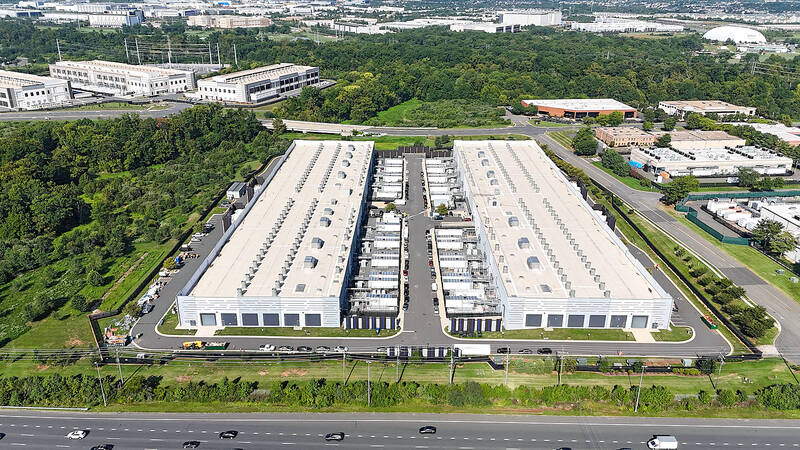
An Amazon Web Services data center in Sterling, Virginia. Photo: AFP
With consumers, companies and governments increasingly using AI, tech giants such as Microsoft Corp and Amazon.com Inc and smaller data center providers are setting up new computing facilities across the planet at a rapid clip. The bulk of the spending would go into what fills the data centers — hardware from companies such as AI chip leader Nvidia Corp.
At least 75 projects, worth about US$130 billion combined, were blocked or delayed by local opposition during the first three months of this year, according to research group Data Center Watch.
“AI infrastructure is becoming one of the defining capital allocation challenges of the next generation,” said Clara Cutajar, global infrastructure leader at PwC Australia. “It cuts across technology, energy, real estate, supply chains, regulation and financing. This changes how infrastructure investors need to think about capital requirements, risk and returns.”
At the same time, the tech industry is trying to blunt a backlash against data centers that threatens to slow down the buildout. Protesters cite concerns about environmental impacts, resource consumption and more broadly how AI could upend employment and society. The U.S. would capture nearly half the projected data center spending, at US$15.1 trillion, PwC said.
The Asia-Pacific region would follow at US$8.2 trillion, Europe at US$5.6 trillion, the Middle East at US$1.1 trillion and Africa at US$255 billion of the cumulative capital expenditure, PwC’s inaugural Global Data Center Outlook showed.
“Railways. Electrification. The Internet. Each required enormous amounts of capital and defined an era,” the researchers said in the report. “The AI infrastructure cycle under way dwarfs all three. This one resets every four to six years — and shows no signs of ending.”
On an annual basis, global data center spending would increase from about US$800 billion this year to US$1.1 trillion in 2030 and US$1.8 trillion in 2050, PwC predicted.
China and India would drive the largest share of incremental demand, supported by large populations, rapidly expanding digital economies, and substantial headroom for AI to embed in business and consumer activity.
While global demand is strong, factors such as power availability, data sovereignty requirements and the flow of semiconductors would determine which regions capture the investments, PwC said. Power would be the foremost factor that shapes where AI infrastructure investment occurs. Indeed, much of the forecast hinges on how fast reliable electricity supply for data centers can be established, the report said. Affordable, reliable, and increasingly low-carbon electricity at scale is the hardest requirement for many markets to meet.
While the market researchers’ projection assumes a fairly open trading system where chips move freely across borders, disruptions in semiconductor supply chains could cut global investment by nearly 20 percent, they said. Meanwhile, a growing sovereignty push could redistribute, but not reduce, global investment.
“The US$31.6 trillion question isn’t whether the capital exists. It does,” the researchers said. “Nor is the question whether the demand is real. It is. The question is which regions, operators and institutions are positioned to capture it and which aren’t.”
Analysis- Where Will the Money Come From?
OpenAI and Anthropic, the two poster-children for Western frontier AI development, routinely divulge soaring annualised revenue run-rates, but these only give a vague indication as to how things are actually going.
An LLM maker that has had a particularly good month can simply multiply that monthly figure by 12, resulting in a run rate that gives the impression that sales are booming. Two Bloomberg articles from August illustrate this distortion.
The first reveals that Anthropic’s actual revenue reached $11.5 billion in Q2, up from $4.73 billion in prior quarter, giving a total of $16.23 billion for the first half.
The second cites sources claiming Anthropic’s run-rate puts it on track to turn over $65 billion this year.
…………………………………………………………………………………………………………………………………….
Full Stack Orchestration Layer:
The pace and scale of an unprecedented data center buildout is leading to challenges across the infrastructure lifecycle. These challenges point to a need for a single accountable orchestration layer, one designed to manage the seams across the delivery stack. PwC refers to this role as a full-stack orchestrator, a delivery platform that sets the standards, manages the integrated schedule, governs risk and change, and defines how acceptance is measured across the project.
Key Takeaways:
- PwC estimates $5.1 trillion will be invested in data centers in the five years ending 2030 and around $32 trillion over the next 25 years depending on AI adoption.
- Turning that capital into usable megawatt capacity means overcoming the industry’s biggest delivery failures around power, equipment, cooling, construction, commissioning, and compute.
- A full-stack orchestrator can turn fragmented delivery into a repeatable platform by owning standards, schedules, risk, change control, and acceptance across the entire data center build.
…………………………………………………………………………………………………………………………………….
References:
https://www.taipeitimes.com/News/biz/archives/2026/09/04/2003863640
https://www.telecoms.com/ai/no-relief-in-sight-as-pwc-sees-ai-capex-reaching-31-6trn-by-2050
Big tech spending on AI data centers and infrastructure vs the fiber optic buildout during the dot-com boom (& bust)
AI Data Center Boom Carries Huge Default and Demand Risks
Expose: AI is more than a bubble; it’s a data center debt bomb
Will billions of dollars big tech is spending on Gen AI data centers produce a decent ROI?
How will fiber and equipment vendors meet the increased demand for fiber optics in 2026 due to AI data center buildouts?
China vs U.S.: Race to Generate Power for AI Data Centers as Electricity Demand Soars
AI Compute Has a Switchboard Problem: Orchestration & Data Center Fabric Explained
Nvidia CEO Huang: AI is the largest infrastructure buildout in human history; AI Data Center CAPEX will generate new revenue streams for operators