

Cloud networking
Microsoft proposes a 5G overlay on their “Azure for Operators” cloud WAN
In a blog post, Microsoft proposes to sell global data transport and routing services to 5G network operators under its new Azure for Operators business. The proposition (described below) is to use a 5G overlay on Microsoft Azure’s cloud WAN.
“Operators spend a lot of money to manage and maintain their networks and peering relationships, but so does Microsoft. The question then is, why are two massive industries doing the same thing? Because both parties move packets around, doesn’t it make more sense for them to collaborate?” wrote Victor Bahl, Microsoft CTO of the company’s new Azure for Operators business, in a blog post to the company’s website. “Here, the well-managed, reliable, and performant Azure network should be thought of as the backbone that operators trust. With this shift in thinking will come all the advantages of innovation that IT companies like Microsoft are rapidly bringing in.”
Azure’s planet-scale WAN
Azure maintains a massive WAN with significant capacity and one that is continuously growing. We have over 175,000 miles of lit fiber optic and undersea cable systems. This connectivity covers close to 200 network points of presence (PoPs) over 60 regions, across 140 countries.
Azure’s network is connected to many thousands of ISPs and other networks with significant peering capacity. Our global network is well-provisioned, with redundant fiber paths that can handle multiple simultaneous failures, it also has massive reserve capacity in unlit dark fiber. These optical fibers are fully owned or leased by Microsoft, and all traffic between and among Azure datacenters within a region or across regions is automatically encrypted at the physical layer.
This combination of redundant capacity to handle failures, dark capacity for significant growth, and research advancements being made in increasing transmission speeds means that we have a massive amount of spare capacity to serve 5G traffic to a broad array of new operators.

Bahl said Microsoft is selling its network services to large, established 5G network operators that already manage their own routing and transport operations, as well as newer telcos that may not have developed such systems. Under Microsoft’s vision, 5G network operators can focus on erecting cell towers and central offices, but can rely on Microsoft’s Internet backbone to carry their customers’ traffic from those locations across the U.S. and the rest of the world.
Making Azure WAN great for 5G traffic
For many years, Microsoft researchers and engineers have been working on a hybrid-global traffic orchestrator for routing network packets across Azure’s WAN. Our orchestrator takes control away from classic Internet protocols and instead moves that control into software that we build and control for 5G traffic. We place the 5G flows that demand high performance on low-latency, high bandwidth paths to and from the Internet. Network flows that are cost-sensitive are instead routed through cheaper paths.
In effect, we have developed a fast-(packet) forwarding mechanism to build a 5G overlay on our existing WAN, thereby supporting a variety of 5G network slices with different wired transport properties, while avoiding interference with the operation of the underlying enterprise cloud network.
We have also extended our state-of-the-art network verification capability to cover complex network topologies by modeling Virtual WAN, Virtual Networks, and other network function virtualizations (NFVs), as well as modeling reachability using formal methods. Using fast solvers, we can verify reachability constraints on customer topologies, at deployment time or when undergoing a config change.
We have applied machine learning to predict the impact of peering link outages and congestion mitigation strategies and use the data to improve the availability of the WAN peering surface area.
Our expertise in optimization algorithms has been shown to ultimately reduce cloud networking spend. Techniques like these will be invaluable in carving out 5G paths on the overlay that are cost-efficient, but still meet the performance needs of every network slice.
o[
The significant upside for operators
To reiterate, Microsoft is heavily invested in running a well-managed, always-available global network. We have been incorporating multiple groundbreaking technologies, including scalable optimization, formal verification of routing policies, machine learning, and AI. We envision operators to not only be able to use our WAN to transfer 5G packets, with low latency, but also to benefit from multiple network services such as DDoS protection, firewalls, traffic accelerators, connection analytics, load balancers, and rate limiters, many of which we use in running existing Azure network workloads.
At Microsoft, we bring the full power of research and engineering leadership into our networks, rapidly incorporating innovation and new features to provide reliable, low-latency, low-cost service. In turn, this effort will open up the significant potential of next-generation services and applications as envisioned by the community at large. It is no understatement to say that collaboration between operators and Azure is key to unleashing the true power of 5G.
 o[
o[Last year Microsoft acquired telecom software vendors Affirmed Networks and Metaswitch Networks, and subsequently introduced its Azure for Operators to “provide operators with the agility they need to rapidly innovate and experiment with new 5G services on a programmable network.” The company earlier this year doubled down on the opportunity with the purchase of AT&T’s Network Cloud operation, a move that positions AT&T to shift its 5G core network operations into Microsoft’s cloud over the next three years.
More broadly, Microsoft is one of a trio of massive cloud computing companies that are hoping to generate sales among telecom companies, including 5G network operators. Google, Amazon Web Services (AWS) and Microsoft are all now selling various products and services into the telecom space.
Several telecom network providers including Canada’s Telus and Deutsche Telekom – are jumping at the prospect of partnering with a cloud computing service provider. Of note is Dish Network’s massive deal with AWS, whereby it plans to run all of its network software in the Amazon cloud and AT&T outsourcing its 5G SA Core network to run on Microsoft Azure cloud.
References:
https://azure.microsoft.com/en-gb/blog/unleashing-the-true-potential-of-5g-with-cloud-networks/
AT&T 5G SA Core Network to run on Microsoft Azure cloud platform
ManTech and Google Cloud open joint facility to expedite government adoption of cloud technologies
In April, Google Cloud announced a partnership with ManTech to accelerate US government adoption of cloud technologies. The partnership will combine Google Cloud technology and security capabilities with ManTech’s federal solution delivery capability and public sector domain expertise. The two companies will launch a joint demonstration facility in Northern Virginia to showcase their combined technology capability.
Together, ManTech and Google Cloud’s full range of capabilities and technology know-how can meet government needs across multi and hybrid cloud environments, infrastructure modernization, application development, data management, artificial intelligence, analytics, and cybersecurity. This will enable the two companies to jointly assist agencies with core areas of modernization including multi-cloud and hybrid cloud adoption, hyperscale analytics, security, 5G, and edge-computing.
Google Cloud’s partnership with ManTech was said to be a critical step toward meeting the federal customer mission by expediting cloud adoption, and helping to solve the government’s unique challenges with new solutions and capabilities. As the need for cloud adoption has accelerated, and cybersecurity threats continue to destabilize our critical infrastructure, strategic private sector partnerships that support U.S. government interests have a key role to play in facilitating remote collaboration, and securing the welfare of Americans.

References:
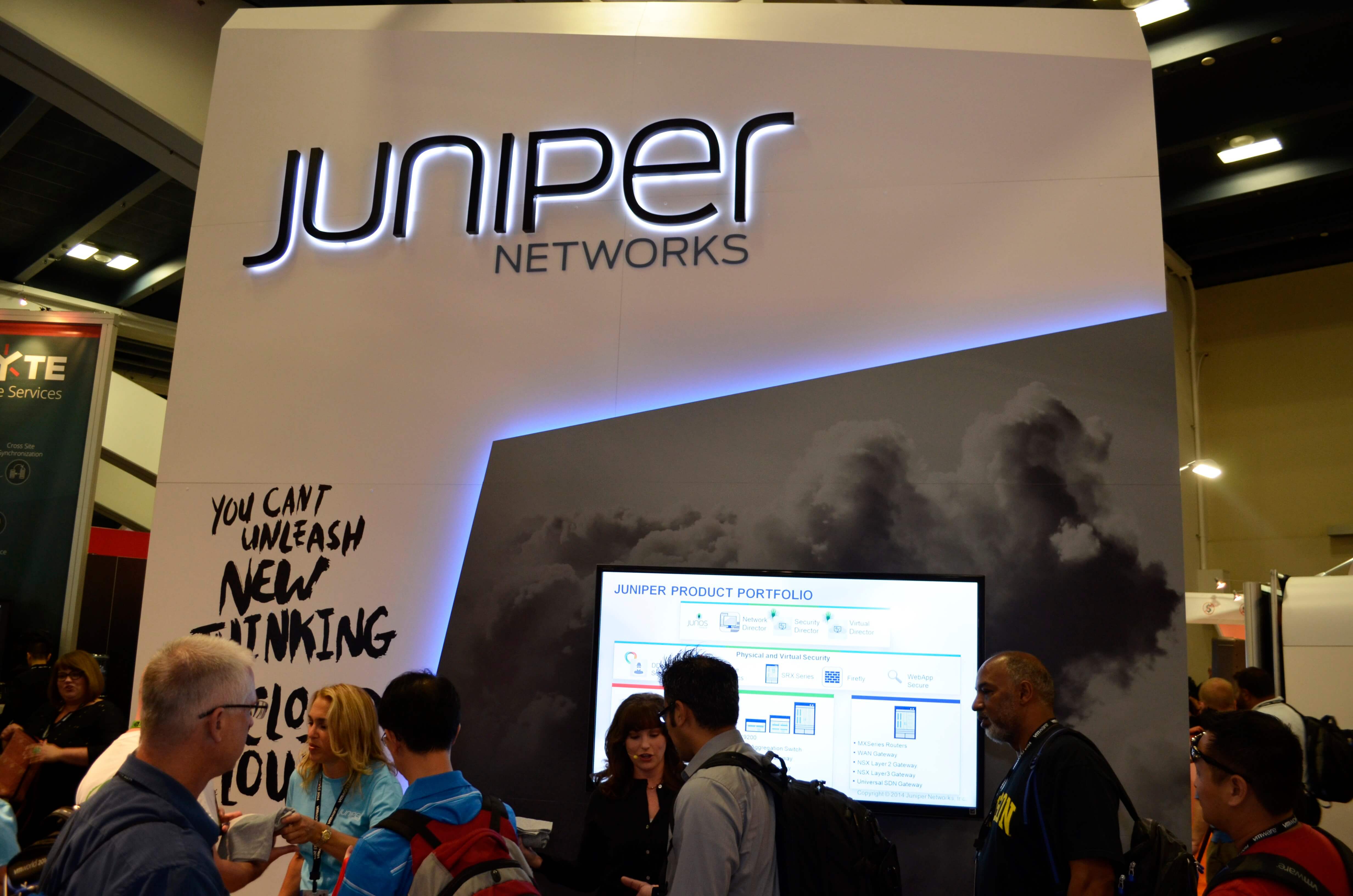
Juniper CEO: Cloud and AI-driven strategy: #1 in Cloud WAN routing
“Ultimately cloud is not just a market segment. When people think cloud, they think AWS, Azure and Google. Certainly, these are companies that have built their entire businesses around cloud-service delivery models but I view cloud as a way of life for every customer across every vertical. CIOs of enterprises wake up in the morning and wonder how they are going to protect their companies from disruption that’s happening outside of their four walls and do so while they don’t really have unlimited budgets and most of their employees are stuck in just keeping the lights on. Up to 80, 90% of the IT of an enterprise company are just keeping status quo running. That’s not a recipe for success,” said Juniper CEO Rami Rahim.
Expansion into Cloud Majors is a priority as it’s seen as the growth driver of enterprise digitalization:
– Accelerated enterprise shift of workloads into public clouds
– Direct Cloud connectivity drives growth in MX edge routers
– Two-sided business opportunity: Cloud + Enterprise WAN
Growth driver of 400G core upgrades
– Comprehensive 400G fixed & modular platform portfolio
– Investment in custom, high-performance Triton silicon for 400Gb/sec
• >100 customers for 400Gb/sec WAN solutions
Speaking at the JP Morgan 49th Annual Global Technology, Media and Communications conference today, Rahim said that the company’s enterprise business has never been as strong as it is today and he attributes much of that strength to the company’s AI-driven enterprise strategy.
“AI-driven enterprise is not just a marketing slogan,” Rahim said. “There is technical substance. We have an AI engine that drives the solutions that we are offering customers today,” he added.
Much of the company’s AI-driven enterprise strategy is a result of its 2019 acquisition of Mist Systems, which had an AI-powered wireless platform that Juniper then used to enhance its own networking solutions.
“We’ve been taking share [from competitors] in the face of meaningful headwinds,” Rahim said. “I expect once those headwinds lessen as we emerge from Covid, we will see even more improved dynamics.”
Juniper said that it plans to extend that AI-driven focus to other areas of its business, such as SD-WAN. Juniper purchased 128 Technology last October for $450 million and is in the process of combining 128 Technology and Mist’s AI capabilities into its SD-WAN solution.
Rahim said that he believes Juniper’s IP routing and transport business will see the most opportunity because the move to 5G will mean more traffic from the radio access network (RAN) to the transport network and the cloud.
Security is also a potential area of growth from 5G investments. Rahim said that future 5G networks are going to be more prone to threats, and service providers will need to invest in more high-end security.
He also said that Juniper projects that its service provider business will grow close to 2% for the full year with the revenue increasing 17% year over year.
On the supply chain front, Juniper executives warned during the company’s first quarter earnings report last month that it could be negatively impacted by the ongoing semiconductor shortage. Those shortages are still a concern, the company said, noting that it will continue to need extended lead times for products through the rest of the year.