

Ericsson integrates Agentic AI into its NetCloud platform for self healing and autonomous 5G private networks
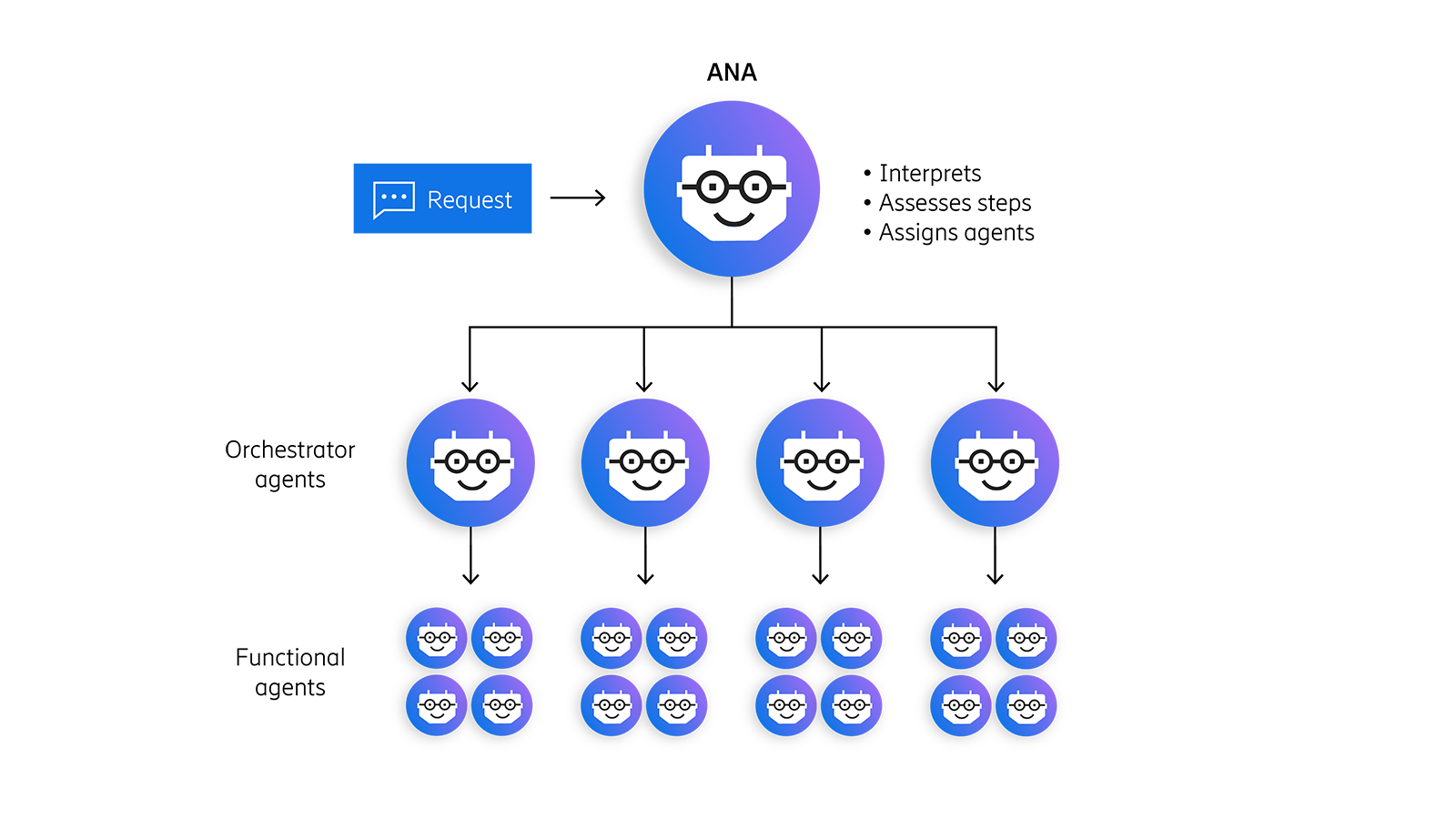
Ericsson is integrating Agentic AI into its NetCloud platform to create self-healing and autonomous 5G private (enterprise) networks. This initiative upgrades the existing NetCloud Assistant (ANA), a generative AI tool, into a strategic partner capable of managing complex workflows and orchestrating multiple AI agents. The agentic AI agent aims to simplify private 5G adoption by reducing deployment complexity and the need for specialized administration. This new agentic architecture allows the new Ericsson system to interpret high-level instructions and autonomously assign tasks to a team of specialized AI agents.
Key AI features include:
- Agentic organizational hierarchy: ANA will be supported by multiple orchestrator and functional AI agents capable of planning and executing (with administrator direction). Orchestrator agents will be deployed in phases, starting with a troubleshooting agent planned in Q4 2025, followed by configuration, deployment, and policy agents planned in 2026. These orchestrators will connect with task, process, knowledge, and decision agents within an integrated agentic framework.
- Automated troubleshooting: ANA’s troubleshooting orchestrator will include automated workflows that address the top issues identified by Ericsson support teams, partners, and customers, such as offline devices and poor signal quality. Planned to launch in Q4 2025, this feature is expected to reduce downtime and customer support cases by over 20 percent.
- Multi-modal content generation: ANA can now generate dynamic graphs to visually represent trends and complex query results involving multiple data points.
- Explainable AI: ANA displays real-time process feedback, revealing steps taken by AI agents in order to enhance transparency and trust.
- Expanded AIOps insights: NetCloud AIOps will be expanded to provide isolation and correlation of fault, performance, configuration, and accounting anomalies for Wireless WAN and NetCloud SASE. For Ericsson Private 5G, NetCloud is expected to provide service health analytics including KPI monitoring and user equipment connectivity diagnostics. Planned availability Q4 2025.

Manish Tiwari, Head of Enterprise 5G, Ericsson Enterprise Wireless Solutions, adds: “With the integration of Ericsson Private 5G into the NetCloud platform, we’re taking a major step forward in making enterprise connectivity smarter, simpler, and adaptive. By building on powerful AI foundations, seamless lifecycle management, and the ability to scale securely across sites, we are providing flexibility to further accelerate digital transformation across industries. This is about more than connectivity: it is about giving enterprises the business-critical foundation they need to run IT and OT systems with confidence and unlock the next wave of innovation for their businesses.”
Pankaj Malhotra, Head of WWAN & Security, Ericsson Enterprise Wireless Solutions, says: “By introducing agentic AI into NetCloud, we’re enabling enterprises to simplify deployment and operations while also improving reliability, performance, and user experience. More importantly, it lays the foundation for our vision of fully autonomous, self-optimizing 5G enterprise networks, that can power the next generation of enterprise innovation.”
Agentic AI and the Future of Communications for Autonomous Vehicle (V2X)
Ericsson completes Aduna joint venture with 12 telcos to drive network API adoption
Ericsson reports ~flat 2Q-2025 results; sees potential for 5G SA and AI to drive growth
Ericsson revamps its OSS/BSS with AI using Amazon Bedrock as a foundation
Ericsson’s sales rose for the first time in 8 quarters; mobile networks need an AI boost
3 thoughts on “Ericsson integrates Agentic AI into its NetCloud platform for self healing and autonomous 5G private networks”
Leave a Reply to IEEE Member Cancel Reply

Really exciting move by Ericsson! The agentic AI upgrade in NetCloud could be a game-changer for private 5G networks, especially in reducing downtime and simplifying deployment.
This is really cool news! The concept of self-healing and autonomous 5G private networks is a huge leap forward. I found it particularly interesting how Ericsson’s agentic AI aims to simplify private 5G adoption by reducing deployment complexity and the need for specialized administration. That’s a practical benefit for enterprises.
AI’s role in handling 5G troubleshooting directly has yet to be conclusively proven. However, AI can assist in three primary ways to improve network reliability:
1. Root Cause Analysis (RCA): Systems like B-YOND’s AGILITY have demonstrated a 10x increase in RCA coverage, identifying and resolving network issues with far greater precision than traditional methods.
2. Troubleshooting Efficiency: Solutions such as Huawei’s iFaultCare claim to improve troubleshooting efficiency by 40%, helping operators pinpoint faults faster.
3. Closed-Loop Remediation: Some AI assistants can now automatically diagnose common problems and take corrective actions—such as restarting services or rerouting traffic—without human intervention
Current AI troubleshooting pilot projects:
1. Predictive Maintenance: AI models identify early warning signs like signal degradation or abnormal power usage to predict failures before they happen, reducing downtime by over 30% for network operators like Verizon.
2. Real-Time Optimization: AI-driven automation allows for real-time performance adjustments, with Ericsson reaching 99.91% network availability through these technologies.
3. Anomaly & Threat Detection: AI continuously monitors traffic patterns 24/7 to detect security breaches and unauthorized access far faster than human experts.
Despite these successes, full autonomy faces several hurdles:
1. Legacy Systems: Integrating AI with older 2G/3G/4G infrastructure that 5G must coexist with is technically difficult.
2. Trust and Explainability: Operators often prefer “open-loop” systems where AI provides a recommendation but a human makes the final critical decision to ensure reliability.
3. Complexity: 5G networks are multi-layered, and finding experts who understand both network topology and AI remains a significant barrier to implementation.