

5G SA/5G Core network
Deutsche Telekom tests 5G SA network via “Telekom cloud infrastructure”
Deutsche Telekom has started testing the “standalone” (SA) version of 5G, setting up its first 5G SA antenna site in the town of Garching, near Munich. The site will be the first in Germany with 5G core network technology, which has yet to be standardized.
The antenna site will soon be connected to a 5G Standalone core network. The core network will be implemented via a Telekom cloud infrastructure. The hallmark of 5G Standalone is that the infrastructure in the core network will also be fully upgraded to a new, cloud-based 5G architecture. This is the next evolution of 5G and also a prerequisite for new deployment options.
Deutsche Telekom has already achieved 68% coverage of the German population with non-standalone (NSA) version of 5G, which uses the existing 4G-LTE network as an anchor for all non radio aspects.
“It is important for us to be at the forefront of the further innovation steps of 5G,” says Claudia Nemat, Board Member for Technology and Innovation at Telekom. “To ensure that our customers can take advantage of technologies such as network slicing or edge computing in the future, we continue to actively drive the development of 5G and its features.”
With 5G Standalone, the network structure and architecture is changing. The 5G technology currently deployed in Germany is based on the 5G Non-Standalone (5G NSA) network architecture. This means that today’s 5G offerings are still technically dependent on a simultaneously available 4G network (LTE) and virtually “piggyback” on this network, i.e., they do not yet function completely independently.
“5G standalone is one of the goals for us with 5G,” said Walter Goldenits, head of technology at Telekom Deutschland. “The network innovation in Garching is initially the first step for us into the 5G SA live network. It helps us to gain necessary and important experience with 5G SA. A rollout in the area will then also depend on the requirements of our customers. Technology and the market will play a joint role in further development.”
There are currently no terminals for customers that support 5G standalone. Telekom is therefore conducting the first tests with special development software on commercially available devices. The goal is to test various connections and applications that function completely standalone and without the support of 4G in the coming weeks.
“The further roll-out of 5G is the preparation of our network for the next steps in 5G development. We will use every opportunity to make 5G even faster and develop it further,” says Walter Goldenits.
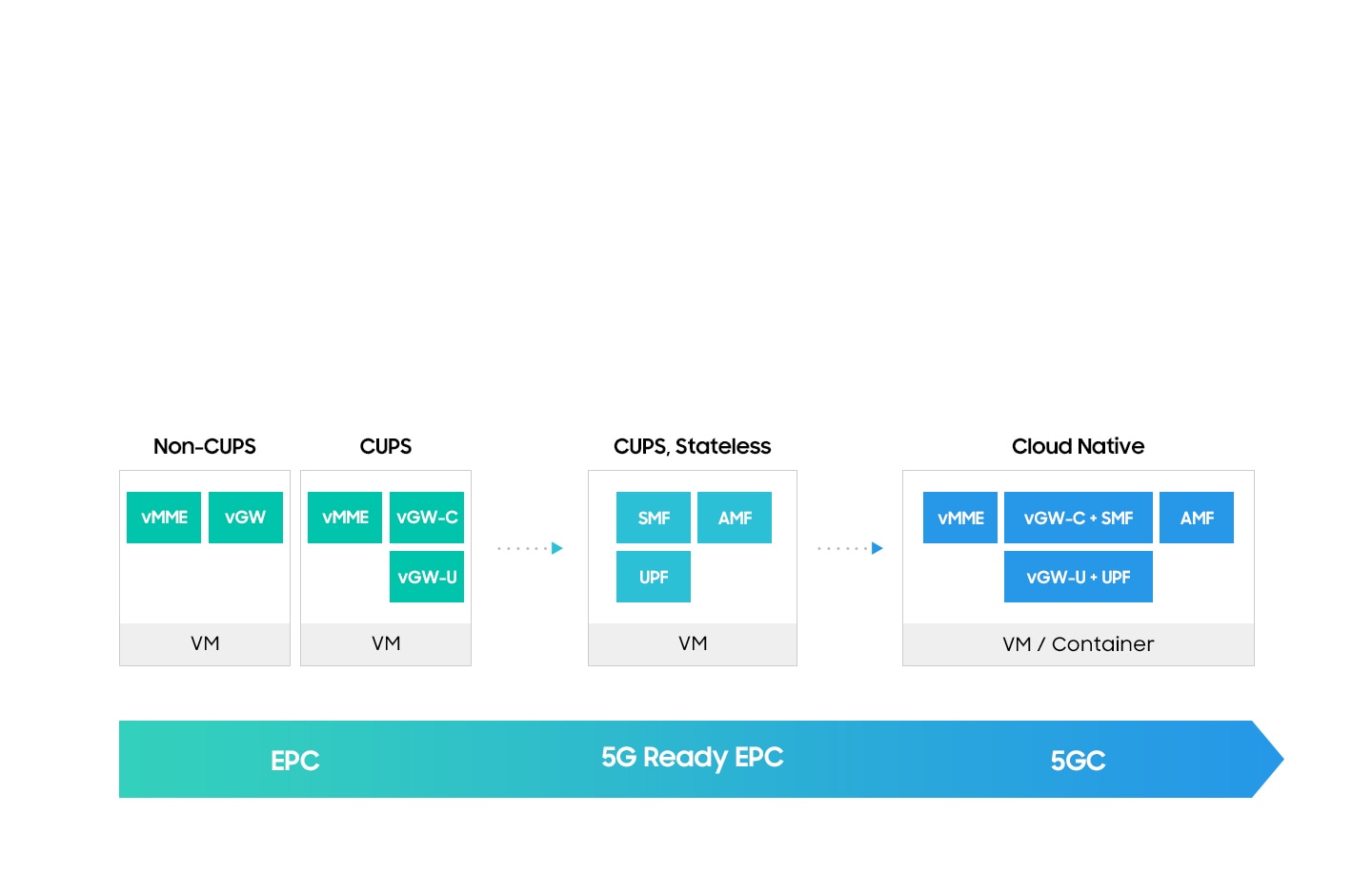
Image courtesy of Samsung
…………………………………………………………………………
Last month, Samsung and Deutsche Telekom conducted their first 5G SA trial in Pilsen, the Czech Republic, verifying performance of 5G SA multi-user, multiple-input, multiple-output (MU-MIMO) technologies.
The trial used Samsung’s latest end-to-end 5G SA solutions. In the SA trial, the two companies achieved outstanding results with the MU-MIMO technology using Samsung’s 3.5GHz Massive MIMO radio. The spectrum efficiency was tripled in comparison to that of LTE under realistic conditions and the throughput was increased by about 2.5 times of SU-MIMO (Single-User MIMO).
“We are pleased to collaborate with Samsung to verify the performance of its 5G SA solution,” said Alex Choi, SVP Strategy & Technology Innovation, Deutsche Telekom. “Together with strong partners we are consistently introducing advanced technical capabilities into our network, and we are very excited about the potential of 5G SA networks to further accelerate the 5G evolution.”
Samsung also said: “5G SA architecture enables mobile operators to have more efficient and simple network operations, while empowering 5G networks to deliver immersive user experiences and new business models for enterprises.”
References:
https://www.telekom.com/en/media/media-information/archive/telekom-tests-5g-standalone-619118
https://www.samsung.com/global/business/networks/products/core/cloud-core/
https://en.yna.co.kr/view/AEN20210128009500320
Rakuten Communications Platform (RCP) defacto standard for 5G core and OpenRAN?
In Japanese, Rakuten stands for “optimism.” This philosophy lies at the core of the company’s brand. They may be the leader is selling 5G mobile core network specs and virtualization network software to global network operators in the absence of any ITU-T standards or 3GPP detailed implementation specs. [Please refer to References for more details, especially on the 3GPP Technical Specifications 23.501, 23.502, 23.503.]
Rakuten Communications Platform (RCP) has been sold to a total of 15 customers so far, according to the company’s mobile networking CTO Tareq Amin.
“We have already 15 global customers. A lot of people don’t know that the sales already started. And these are not small customers. Some of them are very, very massive,” he said this week during a virtual roundtable with members of the media. “I’m really delighted to see that we finally are reaching a stage where possibly in the next quarter or so we have a very large contract about the entire RCP stack.”
Regarding network performance, Amin explained that success factors are based on virtualization, standardization, optimization and automatizing. Combined, they lead to more cost efficiency, innovation, affordability and growth.
Rakuten Mobile was the first to deploy a large-scale OpenRAN commercial network and the first fully virtualized, cloud-native mobile network. And Amin refutes the perceived limitations of open radio access networks, arguing that Rakuten Mobile’s only limitation today is spectrum assets.
“With less than 20% of spectrum assets compared to our competitors, we are doing great. OpenRAN does not mean we have an average network; the truth is that we have a world-class network,” he added, explaining that once Rakuten Mobile moves from five to 20MHz, there will be a significant improvement in performance, while 5G deployment is also accelerating.
Despite launching a commercial service during a global pandemic, Rakuten Mobile already has received more than 2 million applications, with the majority of applications made online rather than in stores.
Rakuten appears to have broadened its focus a few months later when it announced it acquired operational support system (OSS) provider Innoeye for the “Rakuten Communications Platform (RCP).”

Rakuten officially took the wraps off RCP in October 2020 with an announcement that it was “bringing 5G to the word.” The business is based in Singapore and headed by Rabih Dabboussi, who previously worked at networking giant Cisco and cybersecurity company DarkMatter, according to his LinkedIn profile, before joining Rakuten in May 2020.
RCP essentially is the platform on which Rakuten is building its 4G and 5G networks in Japan. Amin explained that the offering consists of a number of different, interchangeable pieces including network orchestration, cloud management and artificial intelligence provided by a range of participating suppliers. RCP customers can pick and choose which parts of the platform they wish to use.
From Amin’s email to this author: “NEC/Rakuten 5GC is 3GPP based standardized software for network service and a de facto standard container basis infrastructure (“infrastructure agnostic”). It is a forward looking approach, but not proprietary.”
“NEC/Rakuten 5GC openness are realized by implementation of “Open Interface” defined in 3GPP specifications (TS 23.501, 502, 503 and related stage 3 specifications). 3GPP 5GC specification requires cloud native architecture as the general concept (service based architecture). It should be distributed, stateless, and scalable. However, an explicit reference model is out of scope for the 3GPP specification. Therefore NEC 5GC cloud native architecture is based on above mentioned 3GPP concept as well as ETSI NFV treats “container” and “cloud native”, which NEC is also actively investigating to apply its product.”
RCP essentially positions Rakuten against cloud giants like Amazon, Google and Microsoft, companies that are also selling cloud-based network management and operational services to network operators globally. Indeed, Microsoft last year acquired Affirmed Networks and Metaswitch Networks in pursuit of that goal.
Rakuten’s sales of RCP are directly linked to the success of the company’s ongoing 4G and 5G network buildouts in Japan. As a result, the company has been quick to address concerns over the performance of its mobile network in Japan which is both based on RCP.
“What we’ve done in 4G was enabling a world-first virtualized infrastructure. For 5G, we have a world-first containerized architecture, completely cloud-native radio access software that is (made up of) disaggregated micro services,” he explained.
“Between LTE, which is 40MHz and about 500MHz of spectrum assets, we think we have a very strong position to be able to increase capacity and demand.”
“We’re very confident about our business model and our business plan. And the idea to have zero churn in the network is also a unique value proposition that really emphasizes the critical role of the [Rakuten Mobile] ecosystem and the critical role of data for our long term viability,” said Amin.
References:
https://rakuten.today/blog/rakuten-scales-nationwide-mobile-network.html
https://www.etsi.org/deliver/etsi_ts/123500_123599/123501/16.06.00_60/ts_123501v160600p.pdf
Why It’s IMPORTANT: Telefonica, Rakuten MOU on Open RAN, 5G Core Network and OSS
Rakuten Mobile, Inc. and NEC to jointly develop the containerized standalone (SA) 5G core network
China tops 200M 5G subs while operators move to 5G SA
According to filings by China’s state owned telcos, China now has more than 200 million “official 5G subscribers.” China Mobile and China Telecom tallied 147.4 million and 74.9 million “5G package subscribers” respectively as of November 30, 2020. China Mobile adding nearly 19 million subs last month.
“Package subscribers” is a unique category that includes subscribers that have migrated to 5G but are still using 4G phones, which greatly overstates the actual 5G user numbers.
- China Mobile is adding 5G subs at a fast pace, with 18.6 million adds last month and 15.2 million in October.
- China Telecom added more than 7 million every month since August.
- The third telco, China Unicom, has suffered a net loss of 11.4 million subs for the year to date. It had 307.1 million mobile customers at November 30, down 1.9 million on the previous month.
Some energetic price-cutting has helped. At launch time in November 2019 the lowest package price was 128 yuan ($19.57). Now many plans are being sold at 100 yuan ($15.29) or less.
………………………………………………………………………………………………………………………………………….
Separately, the three state owned network operators are said to be close to deploying 5G standalone (SA) with a 5G core network. China Unicom and China Telecom are leading the move.
China Telecom says its 5G standalone network is commercially available in more than 300 cities, according to Sohu.
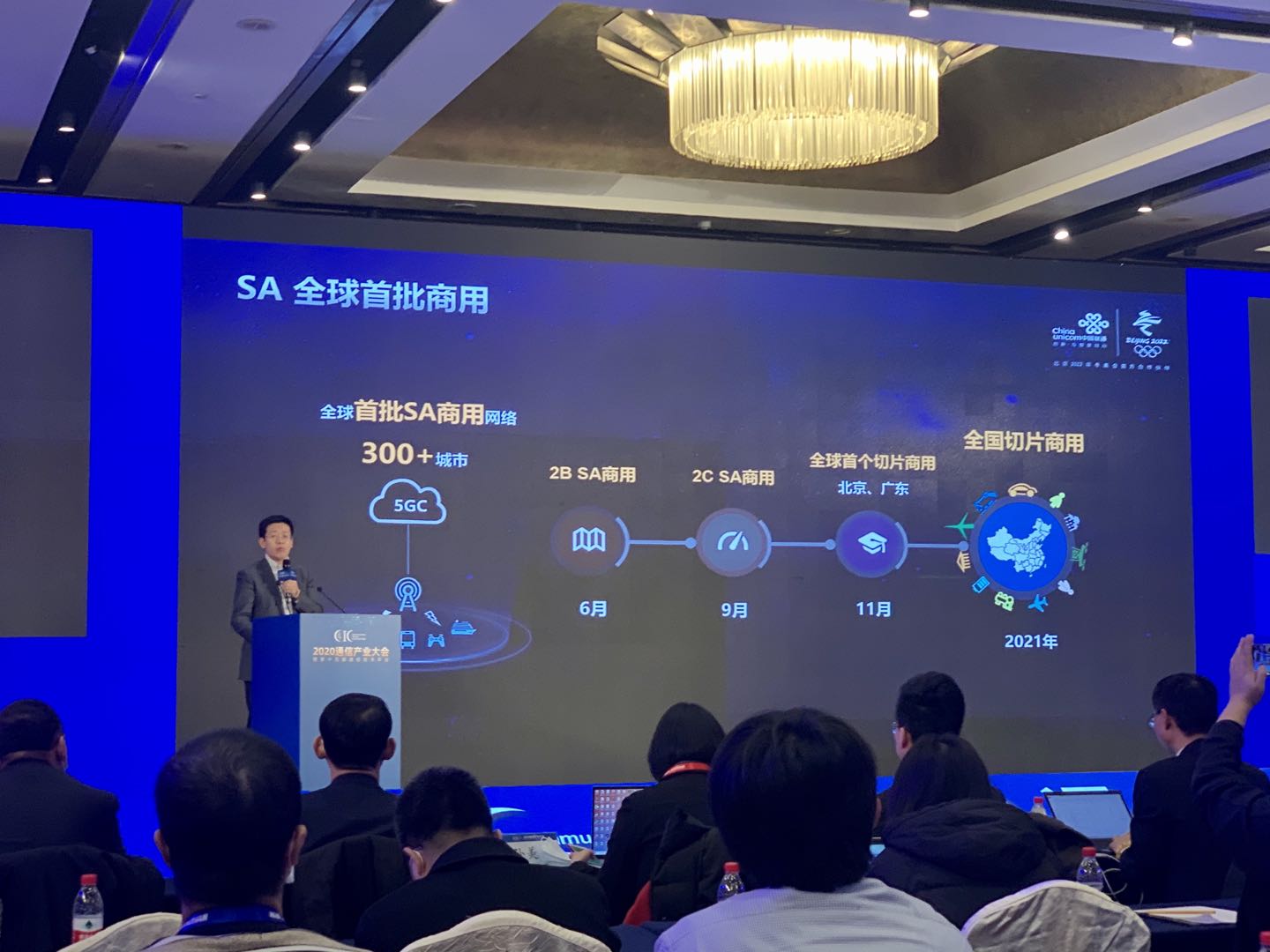
According to THEELEC, China Unicom will expand 5G network slicing technology to the whole country next year, the company said on December 7th at a press conference in Beijing. China’s third largest telco launched 5G SA network in over 300 cities this year, the company said. Last month, it added network slicing technology to its 5G network in Beijing and Guangdong Province.
Miao Shouye, the head of China Unicom’s 5G co-construction project with China Telecom, spoke at the “2020 Communication Industry Conference and the 15th Communication Technology Annual Conference” on December 17th. He said that “China has achieved full leadership in the 5G field.”
Also, that China Unicom launched the world’s first commercial network slicing service in Beijing and Guangdong in November. It will be commercially available nationwide next year, C114 reported.
Data shows that China has more than 700,000 5G base stations , accounting for 80% of the world’s total; 5G users exceed 160 million, accounting for 70% of the world’s total. The rapid development of networks and users has also driven the development of terminals. China’s 5G terminal shipments accounted for more than 60%, and 5G thousand yuan phones began to appear.
In Miao Shouye’s view, mobile internet is about to enter the 5G era. “It is estimated that by 2021, the penetration rate of 5G users in China will cross the 20% mark.”
In 2020, China Unicom has achieved good results in 5G co-construction and sharing. According to reports, as of the end of this year, the two parties have shared 5G base stations with a scale of 380,000 stations, realizing 5G coverage in cities and key counties at prefecture-level and above across the country, and completing the goal of jointly building “one network.” At the same time, co-construction and sharing also saves 5G expenses, CAPEX saves 40% and OPEX saves 35% annually. Based on such a co-built and shared network, the rate has been further improved, and the world’s highest 3.2Gbps peak experience rate of 200MHz full sharing is the first.
As the network is deployed, technology is constantly evolving. Miao Shouye pointed out that China Unicom is the first operator in the world to implement SA commercial networks . In June this year, China Unicom announced the commercialization of its 2B SA network; in September, the commercialization of 2C SA; in November, China Unicom achieved the world’s first commercial slicing in Beijing and Guangdong; it is expected that by 2021, 5G slicing will be commercialized nationwide.
In terms of security, China Unicom is actively building 5G security capabilities. The flexible combination of 5G network, MEC , and slice security capabilities provide multiple levels of protection capabilities to meet customized security requirements.
China Unicom continues to carry out technological innovation to enhance user experience. In October this year, China Unicom joined forces with Huawei to demonstrate the first 5G R17 FDD ultra-large bandwidth prototype device PoC field test. At the same time, China Unicom also cooperated with Huawei to carry out innovative experiments, and the throughput rate reached 4.7Gbps.
Miao Shouye believes that the 5G industry supply chain should work together from the terminal to the network to improve capabilities. At the terminal level, power consumption and heating issues need to be paid attention to; terminal network coordination still needs to be continuously strengthened; industry terminals/modules are lacking, shipments are small, and diversity is poor.
- At the network level, 5G standards (ITU) and specifications (3GPP) continue; 5G equipment has high energy consumption and pressure on network operating costs. Network empowerment needs to be improved, such as network slicing, 5G+TSN (Time Sensitive Networking), etc.
- At the business level, 2C killer applications still need to be explored; 5G products need to be continuously improved in practice; 2B business models need to be explored; business applications still need to be incubated.
Meanwhile, China Mobile hasn’t given a timetable for standalone deployment or services, although executives have promised they are building a “premium” SA network.
References:
https://www.lightreading.com/asia/china-5g-crosses-200m-mark-as-operators-prep-for-sa/d/d-id/766292?
AT&T plans to deploy 5G SA this year; “cloud native” 5G core benefits, assessment and status
Status of AT&T 5G SA:
Speaking Tuesday at the Big 5G Event hosted by Light Reading, Yigal Elbaz, SVP of wireless and access technology at AT&T said that its 5G+ mmWave network has been deployed in 35 cities (densely populated, campuses, etc) and AT&T will continue to expand beyond those cities.
‘The new (transformational) 5G architecture being introduced is a cloud native architecture and software for the 5G core and RAN. We’re moving to a disaggregated and open architecture which will allow AT&T to introduce additional players in the ecosystem and drive further innovations. These capabilities manifest themselves in 5G Stand Alone (SA) core.”
5G SA core brings many benefits, through a true end to end 5G network. This is achieved via a virtualized “cloud native 5G core network,” the implementation of which has not been standardized .[1] or even completely specified in 3GPP Release 16.
Yigal said one important benefit of 5G SA core is network slicing, which supports different use cases and quality of experiences. A better way to optimize spectrum and increase 5G coverage [2.] are other important benefits. Most importantly, is the ability to introduce agility and capabilities of iterating development and pushing software, in the same way it was introduced in IP based network systems.
Note 1. Because there is no standard for implementing a 5G SAcore, every 5G SA network operator works with its 5G core vendors to agree on a detailed implementation specification which is then created as software, mostly running on “cloud native” compute servers.
Note 2. By decoupling 5G spectrum from the LTE network used in 5G NSA, 5G coverage area can be increased. Please see Note 3. for further drill down details.
Elbaz described AT&T’s move toward standalone 5G as an important evolutionary step. “Like anything else in 5G, this is a journey,” he explained. He said standalone 5G can support network slicing, improved latency (?) and improved coverage (by decoupling 5G spectrum from the LTE network used in 5G NSA as per the Note 3. below).
Yigal said that with 5G SA extended architecture, AT&T could now more easily extend the 5G network into the enterprise premises. AT&T has more than 3M enterprise customers of different sizes. With multi-access edge compute on prem, those enterprise customers could then have a cost effective 5G network that could keep sensitive data in house, yet still realize 5G benefits, like “low latency.” Vertical industry types for this hybrid inside/outside 5G network include: manufacturing, health care, robotics, military, education, and others.
Regarding the 5G SA core timeline, Elbaz said AT&T is currently developing and testing 5G Stand Alone (SA) operation now and will deploy it by the end of the year. He added that AT&T would work on “scaling” the technology throughout 2021.
Light Reading’s Phil Harvey tried to get Yigal to be more specific. He asked, “When will 5G SA from AT&T be deployed nationwide?”
Yigal replied, “You need to think about the complete capabilities of the ecosystem that needs to evolve. It’s not just the core….Everything needs to be in place to support the scale of 5G SA and supports the use cases that come with it.”
After repeating his remarks about the 5G SA timeline noted above, Yigal said they don’t have specific dates for 5G SA deployment as it is a “journey.”
AT&T did not disclose its standalone 5G core network vendors. Neither has Verizon (see below), which has hinted it would also deploy 5G SA by the end of 2020. [T-Mobile’s 5G core vendors are Cisco and Nokia; Dish Network recently said Nokia would supply its forthcoming 5G core; Rakuten is working with NEC for their 5G core; Reliance Jio says it’s doing its own 5G core].
…………………………………………………………………………………………………………………………………………………………………………
From Ericsson – Standalone 5G facts:
- Target 5G network architecture option
- Simplified RAN and device architecture
- New cloud-native 5G Core
- Brings ultra-low latency (not true until 3GPP Release 16 URLLC for the core network and RAN are completed and tested)
- The only option to provide same 5G coverage for low band as legacy system
- Supports advanced network-slicing functions (and others like virtualization, orchestration, and automation)
Note 3.: Another benefit of 5G SA, noted by AT&T above is improved coverage. That is because the 5G spectrum used is decoupled from the LTE network that is required for 5G NSA. Thereby, that 5G spectrum may be used to reach areas outside of the LTE coverage area. T-Mobile plans to use their 5G SA 600MHz spectrum to achieve wider coverage than would be possible with 5G NSA. The catch is for the 5G only coverage areas there is no fallback to 4G LTE if something goes wrong.
………………………………………………………………………………………………………………………………………………………………………….
In an August 25th press release, Verizon said:
“Instead of adding or upgrading single-purpose hardware, the move to a cloud-native, container-based virtualized architecture with standardized interfaces leads to greater flexibility, faster delivery of services, greater scalability, and improved cost efficiency in networks.”
“Virtualizing the entire network from the core to the edge has been a massive, multi-year redesign effort of our network architecture that simplifies and modernizes our entire network,” said Adam Koeppe, Senior Vice President of Technology and Planning for Verizon. “Verizon has been on the leading edge of virtualizing the core over the past few years and has been bullish in the design and development of open RAN technology, as well as in the testing of that technology with great success.”
………………………………………………………………………………………………………………………………………………………………………………….
Samsung says the 5G core network is further leveraging the cloud concept by migrating to a cloud native core, in which network functions are modularized and containerized to enable highly flexible scaling and function lifecycle management. The cloud native core provides capabilities that allow the network to adapt to changing demands and support new services with minimal interactions required by operational teams. Samsung’s cloud native 5G core implementation includes the following types of software: microservices, containers and a container engine, stateless operation, intelligent orchestration, and efficient NFVi (NFV Infrastructure).
With its 5G core, network operators will be able to rapidly develop services, launch them on time, and adapt the network frequently according to market demands. Open source can accelerate this innovation by providing platform services with features commonly used by 5G core functions such as monitoring, database activities, and high availability related features.
Samsung collaborates with many operators and partners in efforts to create 5G core solutions and to expand the 5G ecosystems through active participation in the following organizations:
- Cloud Native Computing Foundation (CNCF), which leads the de-facto standard for cloud technology, and
- Open Network Automation Platform (ONAP), a telco-oriented open source project
………………………………………………………………………………………………………………………………………………………………………………..
Other Voices on 5G SA:
Ericsson’s Peter Linder, head of 5G marketing in North America told RCR Wireless:
“When we accelerated the standard and said we can do 5G at the end of 2018 rather than the end of 2020, we did not have the ability then to do both core and radio at the same time. We said, ‘Let’s focus on doing all the radio stuff first in way that it’s as easy as we can possibly make it to connect into an existing EPC that’s upgraded with 5G capabilities.”
“The difference between EPC and 5G core is essentially an architectural difference and how you operate and execute around that,” Linder said. “When we looked at all the different migration options…we came to the conclusion that the only way you could secure a smooth evolution for service providers is to combine EPC and 5G core. The dual mode is essentially about giving the option of doing either EPC or 5G core or EPC and 5G core combined.” In that combined scenario, “You can cut and freeze the investment in the current physical and virtualized platforms. Over time you can start phasing out both physical and virtualized EPC and have everything supported by the 5G core.”
“The move from virtualized to cloud-native eliminates integration steps. People went through so much pain depending on which virtualization [solutions]they used on which hardware. Right now, moving toward cloud-native, that takes away a lot of that cost.” Another key factor Linder identified was OPE. With standalone, “The biggest thing that will have an impact on the total costs is the automation. You have to automate as much as you possibly can.”
Speaking on Arden Media’s “Will 5G Change the World?” podcast, Oracle’s John Lenns, vice president of product management, sized up the transition to 5G SA based on three types of network operators: early adopters, fast followers and the mass market. With early adopters (like T-Mobile US, AT&T, Verizon), “You’ll see some standalone architecture networks going live this calendar year.” The fast followers are “putting out requests for information to prepare themselves for issuing RFPs, and the mass market is still further out into the future.”
Lenns highlighted security and rapid security responsiveness and cost efficiencies both capital and operating. “From a capex perspective, they are looking for an efficient transition through virtualization to cloud-native. They don’t want to pay twice. From an opex perspective, they are recognizing that assembling this 5G solution…is a challenge. It’s not easy…The CSPs are looking for solutions that make that opex journey less expensive. How that manifests itself is they are looking for a solution that offer them efficiencies of deployment, more automation, more embedded test tools, more self-healing behavior.”
HPE’s VP and GM of Communications and Media Solutions Phil Mottram tied 5G core adoption to new service-based revenue opportunities. “Investing in a new 5G network before the revenue streams are there is a financial and technical challenge for many carriers, but… telcos can start deployments today and pay for the infrastructure as their revenue grows.”
Omdia (market research firm owned by Informa) expects that few commercial 5G SA core deployments of scale will take place this year. They expect COVID-19 to have delayed deployment timelines by as much as six months as most converged operators prioritized 4G capacity upgrades and fixed broadband investments given the unprecedented rise in home working during the pandemic, and some mobile carriers lowered or deferred capex to prepare for the potential financial shock of fewer net adds and much reduced roaming revenue.
………………………………………………………………………………………………………………………………………………………………………………
References:
https://www.lightreading.com/5g/atandt-to-launch-standalone-5g-later-this-year/d/d-id/764109?
https://www.ericsson.com/en/blog/2019/7/standalone-and-non-standalone-5g-nr-two-5g-tracks
T-Mobile Announces “World’s 1st Nationwide Standalone 5G Network” (without a standard)
T-Mobile US: 5G SA Core network to be deployed 3Q-2020; cites 5G coverage advantage
Why It’s IMPORTANT: Telefonica, Rakuten MOU on Open RAN, 5G Core Network and OSS