

FT: SpaceX considering Starlink Direct-to-Consumer mobile service & terrestrial cellular network infrastructure in the U.S.
According to the Financial Times (FT), SpaceX is evaluating a strategic expansion of its Starlink satellite Internet service to include a direct-to-consumer mobile service in the United States, a move that could materially disrupt the established U.S. mobile network market. According to sources familiar with recent IPO roadshow discussions, President and COO Gwynne Shotwell indicated that the company is considering both a retail Starlink mobile offering and the potential development of a terrestrial cellular network infrastructure.
Such a shift would represent a transition from SpaceX’s current wholesale and partnership-driven model—where Starlink satellite capacity is integrated with incumbent MNO networks—to a vertically integrated retail service directly competing with Verizon, AT&T, and T-Mobile. To date, Starlink’s U.S. mobility strategy has primarily relied on enabling partner operators, notably T-Mobile, to extend coverage in underserved and rural areas via satellite augmentation.
Although commercial terms remain undisclosed, industry analysts infer that Starlink currently participates in revenue-sharing arrangements tied to satellite-enabled service tiers. A direct retail model would enable SpaceX to capture a larger share of end-user revenue while reducing dependence on intermediary operators.
……………………………………………………………………………………………………………………………………………………………………………………………….
Here are some details, as reported by Reuters:
-
SpaceX already offers direct-to-cell connectivity with T-Mobile in the U.S., providing supplemental coverage from space to extend internet access to remote areas. [1.]
-
SpaceX is now considering launching a Starlink retail product and could build its own terrestrial U.S. mobile network, President Gwynne Shotwell told investors during a recent IPO roadshow, the FT report said, citing sources.
-
Reuters could not immediately verify the report. SpaceX did not immediately respond to a Reuters request for comment outside regular business hours.
-
In September last year, SpaceX bought wireless spectrum licenses from EchoStar for its Starlink satellite network for about $17 billion and then again for $2.6 billion in November, giving it the ability to quickly create a strong and affordable direct-to-cell service by using EchoStar’s wireless airwaves.
-
SpaceX will disrupt the $1.6 trillion U.S. communications industry as its satellite broadband unit Starlink expands, brokerage firm Oppenheimer said in a note earlier this month.
-
SpaceX’s record valuation is grounded in Starlink, which has over 10 million subscribers, and a launch business that analysts and investors say has transformed access to orbit.
Note 1. T-Mobile US D2D service has lower than expected usage:
During T-Mobile US’s recent earnings call, CEO Srini Gopalan admitted that just under a year after its commercial launch, T-Satellite is experiencing lower-than-predicted usage. However, he put a very positive spin on the situation, insisting that the technology is doing exactly what it was designed for.
“Our partnership with SpaceX is very strong. We’ve worked closely with them to really invent an entire category, and that’s been putting an end to dead zones. We’re pleased with that,” Gopalan said.
“Most of the usage we’re seeing is in national parks and if anything, courtesy of the great network Dr Saw has built, we’re seeing a lot less usage than we were originally thinking,” he admitted, referring to Chief Technology Officer John Saw. “But it’s a great complementary product.”
……………………………………………………………………………………………………………………………………………………………………………………………….
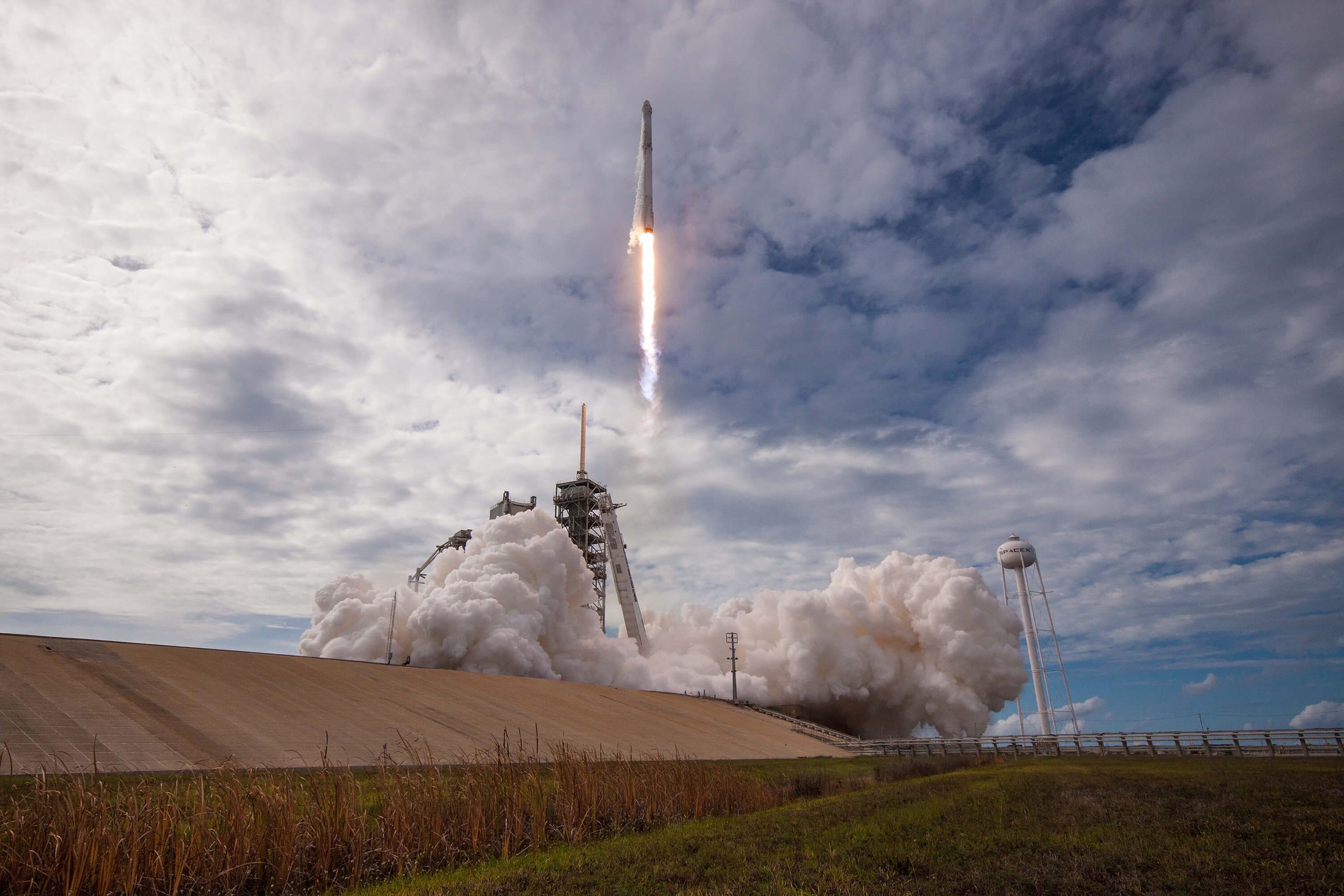
SpaceX Satellite Launch using Falcon 9 Rocket. Image Credit: Space Center Houston
This potential expansion follows SpaceX’s recent IPO, which has intensified investor expectations for accelerated revenue growth and diversification. Starlink already operates in more than 150 countries, delivering broadband services via LEO satellite constellations, with approximately 10.3 million global subscribers as of March. A U.S. mobile retail offering would significantly expand its addressable market beyond fixed satellite broadband.
Importantly, SpaceX has not publicly confirmed plans to launch a retail mobile service. However, speculation has increased following its $17 billion acquisition of wireless spectrum licenses from EchoStar in September, widely interpreted as a foundational step toward mobility services. In its bond prospectus, the company noted that while Starlink Mobile is currently expected “to be most impactful for customers in remote areas uncovered by terrestrial mobile networks,” its long-term positioning is more expansive, stating it would “compete to be the preferred connectivity experience to our customers no matter where they are located, whether in rural, suburban or urban areas.”
Despite the strategic rationale, significant technical and economic barriers remain. U.S. MNOs collectively control approximately 1,020 MHz of spectrum, compared to SpaceX’s estimated 65 MHz, according to New Street Research. This disparity highlights the challenges associated with scaling a competitive terrestrial mobile network, particularly in spectrum-constrained and highly saturated markets.
David Barden of New Street Research emphasized the difficulty of such an undertaking, noting that building a “wireless network in saturated markets around the world would be incredibly hard.” However, he added that “[But,] as a starting point for negotiating the best possible revenue-sharing deal with mobile network operator partners? It makes tremendous sense.”
Conclusions:
While a Starlink retail mobile service offering could redefine the company’s role in the telecom value chain, near-term implementation would likely require a hybrid model leveraging both satellite and terrestrial assets, alongside continued strategic partnerships with incumbent operators.
The most useful follow-on question is whether “terrestrial cellular network infrastructure” means acquiring spectrum, building or buying towers, or simply partnering for access and backhaul. If it means an owned network, the economics look very different from satellite direct-to-device: capital spend rises, time-to-scale slows, and the business starts competing head-on with Verizon, AT&T, and T-Mobile instead of complementing them. If it means a hybrid model, then the more plausible path is a bundled satellite-plus-terrestrial offering targeted at coverage gaps, mobility, and emergency connectivity rather than a nationwide full replacement.
The strategic significance of the FT report is not simply another Starlink service tier, but a possible shift from supplemental coverage provider to vertically integrated U.S. mobile operator, with major implications for spectrum policy, carrier competition, and infrastructure investment.
……………………………………………………………………………………………………………………………………….
References:
https://www.ft.com/content/42af0f15-3aa9-49b7-b429-4a39540af03e?syn-25a6b1a6=1 (paywall)
Ookla: Starlink a viable competitor for hybrid 5G/NTN services due to network performance improvements and larger coverage area
Ookla: D2D satellite connectivity surged 24.5% during last 9 months; Starlink’s footprint expansion leads the way
US Mobile’s new bundle combines its multi-network mobile service with Starlink residential internet
Tutorial: LEO Satellite Internet connectivity, D2D, and major providers
Direct-to-Device (D2D) satellite network comparison: Starlink V2 (Starlink Mobile) vs “Satellite Connect Europe”
Starlink doubles subscriber base; expands to to 42 new countries, territories & markets
Elon Musk: Starlink could become a global mobile carrier; 2 year timeframe for new smartphones
GEO satellite internet from HughesNet and Viasat can’t compete with LEO Starlink in speed or latency
U.S. BEAD overhaul to benefit Starlink/SpaceX at the expense of fiber broadband providers
Telstra selects SpaceX’s Starlink to bring Satellite-to-Mobile text messaging to its customers in Australia
SpaceX launches first set of Starlink satellites with direct-to-cell capabilities
Blue Origin announces TeraWave – satellite internet rival for Starlink and Amazon Leo
4 thoughts on “FT: SpaceX considering Starlink Direct-to-Consumer mobile service & terrestrial cellular network infrastructure in the U.S.”
Leave a Reply

The Financial Times report, if substantiated, would be a potentially important inflection point in the evolution of Starlink’s role within the broader telecommunications ecosystem—shifting from a complementary access provider partner to a vertically integrated hybrid operator spanning space-based and terrestrial infrastructure.
From a network architecture perspective, such a move would imply the development of an integrated non-terrestrial network (NTN) and terrestrial cellular network, likely aligned—at least partially—with 3GPP Release 17/18 NTN specifications, but extended with proprietary optimizations. Starlink’s existing LEO constellation could function as both an access and backhaul layer, while a terrestrial RAN deployment would enable capacity offload, improved indoor coverage, and reduced latency in dense urban environments where satellite links remain constrained.
A key architectural question is whether SpaceX would pursue a fully standalone cellular core or adopt a hybrid model leveraging roaming, MVNO frameworks, or shared infrastructure agreements. A standalone approach would require significant investment in spectrum acquisition, core network deployment (potentially cloud-native 5GC), and nationwide RAN densification. Conversely, a hybrid model could allow Starlink to anchor coverage using its satellite footprint while selectively deploying terrestrial small cells or macro sites in high-traffic regions, effectively creating a converged access network with dynamic traffic steering between NTN and terrestrial layers.
Spectrum strategy will be central. Starlink’s existing spectrum assets are optimized for satellite communications (e.g., Ku/Ka bands), which are not directly compatible with conventional mobile device ecosystems for terrestrial cellular. Entry into the U.S. mobile market would likely necessitate participation in future FCC spectrum auctions, secondary market acquisitions, or partnerships to access licensed mid-band and low-band spectrum suitable for wide-area mobility. Alternatively, SpaceX could explore shared or unlicensed spectrum frameworks, although these would introduce performance and interference management challenges at scale.
From a device ecosystem standpoint, the evolution of direct-to-device (D2D) satellite connectivity—currently emerging through partnerships such as Starlink-T-Mobile—suggests a pathway for incremental market entry. However, a direct-to-consumer mobile offering implies tighter integration with handset OEMs, potentially requiring multi-band, multi-mode chipsets capable of seamless NTN-terrestrial handover. This raises additional challenges in power consumption, antenna design, and mobility management across heterogeneous link budgets and propagation environments.
Operationally, integrating a rapidly evolving LEO constellation with terrestrial cellular infrastructure introduces non-trivial complexity in network orchestration, mobility management, and QoS assurance. AI-driven RAN and core automation—areas already under active development across the telecom industry—would likely be essential for real-time traffic steering, interference mitigation, and predictive capacity allocation across domains.
From a market and competitive standpoint, such a strategy would position Starlink in more direct competition with U.S. MNOs, while also potentially reshaping wholesale and roaming dynamics. Incumbent operators may face new pressure not only in rural and underserved markets—where Starlink already has a foothold—but also in niche segments such as IoT, emergency communications, and mobility-centric services where ubiquitous coverage is a differentiator.
At the same time, regulatory considerations—ranging from spectrum licensing and infrastructure siting to national security and net neutrality—could materially influence the feasibility and timeline of such an expansion. The degree to which SpaceX aligns with established 3GPP standards versus pursuing a more vertically integrated, proprietary stack will also have implications for interoperability and ecosystem adoption.
In aggregate, the reported initiative underscores a broader industry trajectory toward converged terrestrial and non-terrestrial networks, where the distinction between “satellite” and “cellular” becomes increasingly abstracted at the service layer. If executed effectively, Starlink’s approach could accelerate this convergence—but it would also require navigating a complex interplay of technical, regulatory, and economic constraints that have historically limited new entrants in the U.S. mobile market.
SpaceX is not starting from zero: Starlink direct-to-cell already received FCC approval for U.S. commercial operation with T-Mobile in late 2024, and service has since been marketed as live for messaging in the U.S.. That matters because the new FT report is best read as a strategic expansion from satellite-supplemented service into a broader retail/mobile ambition, not as an isolated product rumor.
The big conceptual distinction is between supplemental coverage from space and a true carrier-like retail mobile offer. The current FCC framework was built around satellite coverage augmenting terrestrial carriers, with interference and spectrum coordination constraints still central to approval. If SpaceX really explores its own U.S. terrestrial cellular infrastructure, that would move the company from “coverage partner” toward “network owner,” which is a much heavier regulatory and capital-intensity step.
Competitive and regulatory angle:
AT&T and Verizon have already argued that Starlink type of direct-to-cell service could interfere with terrestrial networks, and that dispute is still relevant to any move beyond the current model. So a U.S. retail/mobile push would almost certainly trigger fresh questions about spectrum access, interconnection, roaming, device certification, and whether SpaceX is trying to replicate a full MNO business rather than merely extend coverage.
AT&T, Verizon, and T-Mobile announced a joint partnership to pool satellite spectrum resources for direct-to-device coverage and emergency backups, notably excluding Starlink from the alliance.
To protect their dominance in both terrestrial and emerging satellite-to-phone markets, traditional carriers are actively expanding their own infrastructures, with SpaceX attempting to bypass traditional carriers entirely by purchasing its own wireless spectrum to power a retail network.
From LightReading July 21, 2026:
SpaceX’s stated plan for EchoStar’s spectrum is for a next-gen direct-to-device (D2D) service, but MoffettNathanson questions that since most of the spectrum is for licenses in metro markets. “Buying a national block of spectrum solely to serve only remote rural locations never made any sense,” analysts Craig Moffett and Julie Zhu explained.
It’s not enough for a national terrestrial wireless offering, anyway, according to MoffettNathanson. The firm believes that for Starlink Mobile to become a substitute for and/or competitor to terrestrial wireless companies, it will need to strike an MVNO deal because it doesn’t have the spectrum to build out a network. Doing so would also be incredibly expensive.
While it’s possible that SpaceX might bid in the upcoming auction of 160MHz in the upper C-band, the MoffettNathanson analysts pointed out that spectrum auctions typically aren’t structured for one carrier to grab it all. Plus, the upper C-band “is not great spectrum” due to some propagation limitations, and will take years to clear, they added. The FCC’s proposed rules, set for a July 22 vote, are to enable carriers to light up that spectrum in 75 US markets by the end of December, with the rest to follow by July 2031.
Big Three still a no for a Starlink MVNO:
As for SpaceX and Starlink taking the MVNO path, the analysts said they’re doubtful that AT&T, T-Mobile or Verizon would grant such a deal. Execs with T-Mobile, currently a Starlink direct-to-device (D2D) partner, AT&T and Verizon have already poured cold water on the idea.
“There is no ‘duty to deal.’ That is, none of the Big Three are under any obligation to give Starlink an MVNO agreement,” the MoffettNathanson analysts wrote.
The Big Three’s recently announced D2D joint venture “was, in our view, simply a (rushed) preemptive collective announcement declaring that the three would stand in solidarity against Starlink’s ambitions to compete in wireless. The message between the lines was: no MVNO, not now, not ever,” the analysts added.
No ‘back door’ at Charter
A possible wrinkle appeared in a recent Bloomberg report noting that SpaceX and Charter have held talks about a consumer mobile offering. However, the idea behind that seems to be about Charter offloading some of SpaceX’s traffic via its terrestrial network, which includes millions of Wi-Fi access points and a more limited CBRS deployment.
But, as the MoffettNathanson analysts pointed out, the report said nothing about Starlink using a partnership to tap into Charter’s MVNO agreement with Verizon. The analysts also pointed to a report indicating that the MVNO contract wouldn’t allow SpaceX to tap into it by acquiring Charter because of change-of-control safeguards. They added that they’re hearing the same about Comcast’s MVNO deal with Verizon.
Related:Turning Starlink into a global mobile carrier ‘one of the options,’ Musk says
“There is no back door route to the MVNO” for Starlink and SpaceX, the analysts wrote.
A source familiar with the MVNO business told Light Reading that such change-of-control provisions are common in these MVNO contracts. If, for example, SpaceX were to acquire an MVNO, SpaceX would then need to obtain approval from the MNO to maintain the existing wholesale contract or to negotiate a new one.
MoffettNathanson is also bearish about SpaceX trying to acquire one of the Big Three, as it would present the company with a “massive regulatory headache” and “catastrophically compress SpaceX’s multiple.” However, Elon Musk left that door open last year, noting on a podcast that acquiring a company such as Verizon is “not out of the question.”
SpaceX’s spectrum holdings as a bargaining chip
While the door to a Starlink MVNO deal with one of The Big Three carriers appears to be closed for now, the analysts reckoned that the satellite operator will “try mightily to pry it open” with the spectrum assets it owns, is acquiring or may bid for in the future.
“Absent the option of acquiring its way into an MVNO agreement that already exists, the most likely path for SpaceX to pry that door open for an MVNO is for Starlink to assemble a collection of tradeable assets that it can use to negotiate for an MVNO deal. That most likely means… spectrum,” they explained.
That, by the way, was the path Comcast, Time Warner Cable and Bright House (now part of Charter) took in 2011, when they sold AWS spectrum to Verizon for $3.6 billion. That deal also was the basis of the MVNO deal that Comcast and Charter enjoy today.
The spectrum that SpaceX is acquiring from EchoStar (AWS-4, H-Block and unpaired AWS-3) “all can be thought of as bargaining chips Starlink has already assembled,” the analysts added.
https://www.lightreading.com/satellite/is-spectrum-spacex-s-ticket-to-an-mvno-deal-
Light Reading: SpaceX’s plan to take on US telcos with terrestrial small cell network, new mobile D2D satellite fleet and EchoStar spectrum is met with analyst skepticism.
SpaceX management sent the strongest signal yet that Starlink Mobile intends to compete directly with US wireless carriers with a hybrid satellite-terrestrial network, speaking on the company’s first earnings calls since its IPO in June.
Amid speculation about whether SpaceX will compete by buying or building a mobile network in the US to achieve that, the company confirmed part of the question with a plan to build terrestrial facilities using the spectrum it is acquiring from EchoStar.
“You will have not only the capacity from the satellites themselves, but you will have a build-out of the terrestrial, basically the hardware and systems necessary to make a true mobile service,” said Gwynne Shotwell, president of SpaceX.
The company’s current direct-to-device (D2D) service uses 5MHz of capacity via spectrum from mobile operator partners. With the EchoStar transaction, it is gaining 65MHz of spectrum, which she said is “a massive increase in capability.”
She declined to discuss what the capex would be for the deployment. But the few details offered about the plan suggest it is taking a low-cost route to targeted terrestrial coverage for now rather than a broad national buildout that would require massive spending on additional spectrum.
The idea is to install small base stations alongside Starlink broadband dishes that are located on rooftops of homes and businesses.
“You can have kind of these little femtocells around the country and you deploy that as you need it. You don’t have to necessarily spend many billions of dollars in low-band spectrum all upfront before you deploy your system,” she said.
Musk emphasized that this is the “important point” about the Starlink Mobile plan:
“Instead of having to deploy these very expensive and difficult to locate large cellular base stations, we feel reasonably confident that we can deploy a large number of small stations. Essentially, they’re really just Starlink dishes that also provide connectivity in the mobile spectrum bands … providing connectivity that is, we think, probably better and higher bandwidth than what is currently available from cellular providers,” he said.
SpaceX said it will start launching its V2 Starlink mobile satellites next year with services available at the end of it. The new constellation will have 10 times the number of satellites for mobile as it does now, which is around 650, and have more capacity from EchoStar spectrum, making it “100 times better,” said Shotwell.
Tilting at base stations?
The feisty tone from management on the call lacked any of the cooperative rhetoric displayed when SpaceX unveiled its next-generation mobile constellation plans at Mobile World Congress earlier this year with a purported aim to “augment” mobile networks.
Indeed, Shotwell called out AT&T, T-Mobile and Verizon by name and said the satellite company expects “to acquire quite a few of their customers because I think our service will be better.”
But analysts remain skeptical that SpaceX can really compete with the established carriers without a cable operator partnership, MVNO agreement or spending on additional spectrum. The reticence on mobile capex expectations along with the absence of any operational or financial metrics on mobile D2D in the Q2 earnings compounded the doubts.
MoffettNathanson financial analysts described SpaceX’s ambitions to compete in mobile D2D as “quixotic,” in a research note (registration required). They have previously argued that it would be not able to compete without an MVNO agreement to provide the coverage needed.
Related:Is spectrum SpaceX’s ticket to an MVNO deal?
“Nothing in the today’s commentary – including floating the relatively well-worn idea of a mesh network of rooftop ‘femtocells’ – changes that assessment,” they wrote.
All three US MNOs have been unified in opposition to an MVNO deal with Starlink and even combined forces in a joint venture to reduce reliance on a single satellite supplier, namely Musk’s operation. They also downplay satellite D2D as complementary to their core services, seeking to contain the likes of Starlink to serving just the 2% or so of customers when they are not covered by their networks. SpaceX clearly has other ideas.
TMF Associates analyst Tim Farrar said the plan to compete with US telcos “shows the extent of the confrontation there.”
He also noted that the concept of integrating rooftop antennas into Starlink satellite dishes is “a direct copy” of Charlie Ergen’s plan for his proposed acquisition of Clearwire in 2013.
SpaceX’s plan could lead to “a cable partnership to help in cities” and it would not be surprising to see Starlink buy more spectrum, “most plausibly EchoStar’s CBRS spectrum,” he said. “But it will be a big struggle to build a retail wireless business without any MVNO network access.”
Comments on the Q2 earnings call amplified the confrontational approach SpaceX is taking with US wireless carriers, in contrast to the partnership model it pursues outside the US.
This could have implications for Starlink’s international D2D carrier relationships, notably with Deutsche Telekom, the first operator to team up with Starlink Mobile’s next-generation broadband satellite D2D service.
“I will be interested to see what this confrontation means for DT’s willingness to support Starlink Mobile in gaining 2GHz spectrum access in Europe,” said Farrar.
SpaceX reported 12 million Starlink broadband subscribers as of the end of June, adding 1.7 million in the second quarter and double the number of customers in the previous year.
The connectivity unit is the largest contributor to SpaceX’s total revenue, recording $4.3 billion in Q2, driven by subscriber growth in the consumer segment as well as an uptick in enterprise and government revenue.
Starlink is making a bigger push into the enterprise space, including airline and maritime, and government sectors. It flagged $6 billion worth of US government contracts for its Starshield low Earth orbit constellation, designed for national security applications. Indeed, Musk said he expects enterprise revenue to “substantially exceed consumer revenue” in the connectivity business.
While SpaceX talked up plans to compete in US wireless with D2D, the company did not disclose the number of Starlink Mobile customers or break out mobile revenues. The immediate focus for connectivity growth is clearly fixed broadband, and, more specifically, enterprise and government customers.
Musk thinks people are “really underestimating” Starlink. “It’s not out of the question that at some point, Starlink will deliver a majority of the world’s Internet, at least in countries where we’re allowed to operate, which is the vast majority of countries,” he said.
“With the advent of AI and humanoid robotics and vehicle robotics and just a massive number of robots, the appetite of bandwidth will be much greater than it has been in the past … I think Starlink is the only thing that can actually service that bandwidth,” he said.
SpaceX reported a net loss of $541 million on revenue of $7.8 billion in Q2. But the most eye-catching number was $15.8 billion capex spend in the AI segment in Q2, as the company increased compute capacity from 1 gigawatt in Q1 to 1.4 gigawatts in Q2. The AI spend dwarfed capex in the space unit ($1.2 billion) and connectivity unit ($1.4 billion).
https://www.lightreading.com/satellite/musk-s-mobile-network-moonshot-is-in-danger-of-a-crash-landing