

Ericsson Expands 5G Beyond Connectivity: Drone Detection, NATO Military Networks and Cross-Border Emergency Communications
Disclaimer: ChatGPT was used extensively for research, source summarization, and drafting assistance in preparing this article. The author reviewed and edited the material and assumes full responsibility for its accuracy, technical content, and conclusions.
Introduction:
Ericsson is advancing the use of 5G mobile networks for applications beyond conventional communications, including drone detection, military connectivity and cross-border emergency response. Two recent Ericsson announcements highlight how mobile-network infrastructure can provide both a new layer of situational awareness and secure, resilient communications for defense and public safety.
1. Ericsson Introduces 5G Integrated Sensing and Communications (ISAC) for Drone Detection
Ericsson has introduced its Integrated Sensing and Communications (ISAC) System, which adds sensing capabilities to mobile networks to detect and track moving objects, including drones that are not connected to the network. Ericsson says their ISAC System closes the low-altitude, wide-area detection gap by transforming the mobile network into a new layer of situational awareness. Using sensing-capable 5G radios, edge computing, AI and signal processing, it detects objects that are not connected to the network and maintains tracks across the coverage area, complementing radar and other sensors rather than replacing them.
The technology addresses a growing security challenge: detecting small, low-flying drones across wide geographic areas. Their size and flight characteristics make them difficult to detect using conventional surveillance systems. While dedicated radar and other sensors will remain important for protecting critical infrastructure, extending their coverage across large areas can require substantial additional infrastructure.
Ericsson’s ISAC approach uses existing mobile-network infrastructure to provide another layer of detection and situational awareness. It combines sensing-capable 5G radios, edge computing, AI and signal processing to identify objects through analysis of radio signals reflected from their surroundings.
How Ericsson ISAC Works:
The system employs a multi-static sensing architecture, in which radio-signal transmission and reception are distributed across multiple geographically separated mobile-network sites. Rather than relying on a single sensing location, multiple sites observe objects from different angles.
This approach is intended to improve detection confidence, positioning accuracy, tracking continuity and coverage resilience. Existing mobile-network infrastructure—including towers, backhaul and spectrum—is used to generate tracking data and AI-based object classification.
Ericsson reports that validated tests have reliably detected and tracked micro-drones at kilometer-scale distances, with precise 3D positioning. Actual performance depends on target characteristics and flight profile, sensing geometry, terrain, surrounding conditions and system configuration.
The resulting sensing information can be securely shared through standardized interfaces with authorized external systems, including security and command-and-control platforms. Combined with conventional radar, acoustic sensors and other detection technologies, ISAC can provide a more complete operational picture.
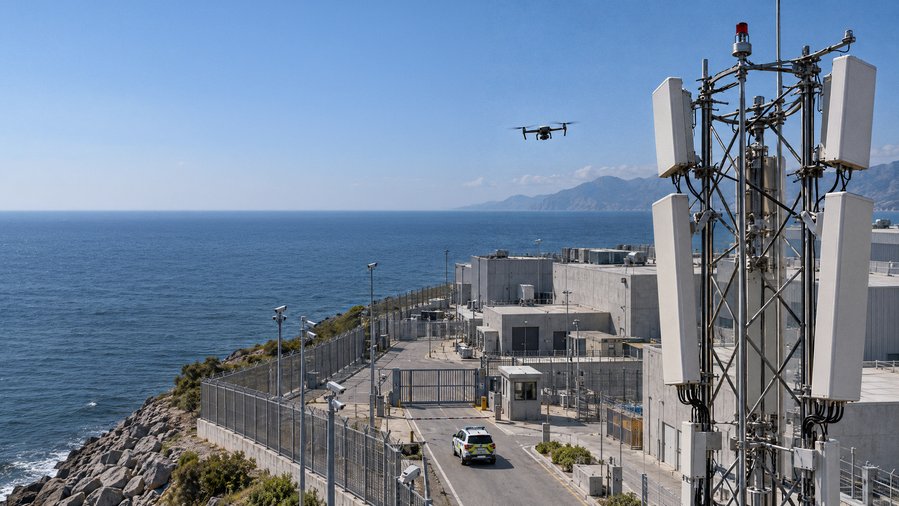
Photo Credit: Ericsson
Field Demonstrations and Commercial Availability:
Ericsson has evaluated the technology in several live 5G demonstrations:
- AT&T, Arlington, Texas: Ericsson and AT&T demonstrated detection, location and tracking of multiple drones, with activity displayed on sensing dashboards.
- Erillisverkot, Helsinki, Finland: Multiple 5G sites were used to detect and track drones, demonstrating the potential for public safety and counter-unmanned aircraft system (counter-UAS) applications.
- Poland: Ericsson, mobile operator Play and technology company Asseco combined 5G-based ISAC with Asseco’s PUSZCZYK acoustic detection system to improve detection and positioning of low-flying drones.
Ericsson plans to introduce the ISAC System commercially in phases. Selected customers are expected to begin small-scale, sensing-only commercial pilots in 2027, followed by broader sensing deployments from 2028. Integrated communications capabilities will be added as the solution evolves toward 6G. The initial commercial offering therefore focuses on network sensing rather than a fully integrated sensing-and-communications 6G network. Potential applications extend beyond military drone detection to public safety, protection of ports and power plants, transportation infrastructure, industrial environments and future low-altitude drone traffic management.
Executive Quotes:
Carl Lundqvist, Chief Architect, Swedish Armed Forces HQ, says: “Detecting small drones across large areas is a growing operational challenge. The possibility of using distributed infrastructure to complement existing sensors could provide an important additional layer of situational awareness.”
Shawn Hakl, SVP & Head of Product, AT&T Business, says: “The next evolution of connectivity is about networks that don’t just move data but help organizations with insights to better understand and respond to the events in the real world. Bringing Integrated Sensing and Communication (ISAC) capabilities into existing 5G infrastructure can provide telemetry and intelligence in situations where it is not possible or desirable to pre-deploy sensors or cameras. Deploying this technology in a complex environment like a stadium is an important example of how intelligent networks can drive better safety and security outcomes from infrastructure already in place.”
Antti Kauppinen, CTO, Erillisverkot, says: “The Ericsson ISAC System shows that dual-use technology can strengthen national security by extending sensing capabilities to help authorities protect people and critical infrastructure. Together with Ericsson, we are exploring how this capability can be developed responsibly to enhance Finland’s resilience, security, and preparedness.”
2. 5G for NATO Military Communications and Cross-Border Emergency Services
Ericsson’s November 5th announcement also highlights the expanding role of 5G in military communications and emergency response across Nordic countries and Europe.
Swedish Armed Forces and NATO Innovation Range:
The Swedish Armed Forces, supported by the Swedish Defense Materiel Administration (FMV), are working with Telia and Ericsson to establish advanced 5G capabilities for military communications and applications. Telia has been selected to develop, build and manage a dedicated 5G network for the Swedish Armed Forces, working with Ericsson, which supplies the infrastructure for Telia’s nationwide mobile network. Sweden and Finland have been given a leading role in NATO’s connectivity innovation through the NATO Innovation Range initiative [1.]. The Swedish Armed Forces has been tasked by its government with establishing an innovation platform for developing and evaluating next-generation wireless networks as part of NATO’s Rapid Adoption Action Plan.
Note 1. The NATO Innovation Range is a NATO initiative led by Sweden and Finland to develop, test and evaluate next-generation military communications technologies, particularly advanced 5G and future 6G wireless networks, under realistic operational conditions. Its objective is to accelerate adoption of secure, resilient and interoperable military communications across NATO forces.
The Swedish Armed Forces’ 5G capability will use nationwide network coverage while providing the ability to extend coverage at military bases and deploy temporary 5G solutions in the field, including at military unit locations and emergency airbases.
The plans also include 5G equipment on military assets such as amphibious craft, frigates and transport aircraft. Satellite-based systems could be integrated over the longer term to improve availability and resilience. Importantly, the new 5G capability is intended to complement existing military communications systems rather than replace them.
The Swedish Armed Forces specifically identifies 5G Standalone (SA) as an enabling technology. 5G-Advanced (3GPP Release 18 and subsequent releases), including 5G Standalone (SA) deployments, can support secure and prioritized communications, high availability and connectivity for large numbers of systems and sensors. Combining 5G with AI and cloud-based services is expected to accelerate the development of military applications and improve coordination between military organizations and civilian critical-infrastructure operators.
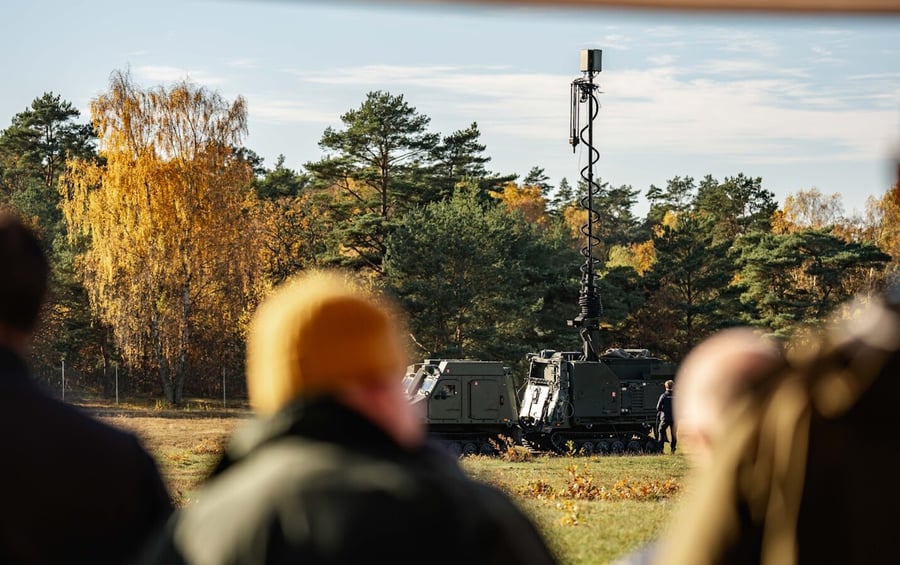
Swedish Armed Forces – connectivity in the field. Photo courtesy of Swedish Armed Forces (Försvarsmakten)
The initiative builds on the earlier NorthStar innovation program operated by Telia and Ericsson, where 5G has been tested for military applications. The NATO Innovation Range platform is intended to move beyond experimentation toward developing and evaluating next-generation wireless networks and translating successful technologies into operational military capabilities.
A November 4 demonstration at Revingehed, Sweden, showed how advanced 5G sensing can be used to detect drones and improve military situational awareness. This connects directly with Ericsson’s newly introduced ISAC System described in the first section of this article.
European Commission Proposes an EU Critical Communication System:
Separately, the European Commission proposed a new EU Critical Communication System (EUCCS) on September 30, 2026, to improve secure and resilient communications among emergency services across the 27 EU member states and four Schengen-associated countries.
Existing national critical-communications systems are not sufficiently interconnected or technically compatible. The proposed EUCCS is intended to address that fragmentation by connecting police, firefighters, emergency medical services and other civil-protection organizations across national borders. The system would enable first responders to exchange data, video, messages and geolocation information in real time through a single secure device. The proposal calls for all 31 participating countries to gradually transition from narrowband radio systems to broadband technologies such as 5G. EU satellite systems would provide additional backup connectivity when terrestrial networks are incapacitated, including during power outages.
The proposed architecture also includes:
- A European Union Network Monitoring Centre, providing a secure and resilient optical-fiber network through which participating countries can connect.
- A European Union Security Monitoring Centre, responsible for monitoring cybersecurity risks, assessing threats and supporting participating member states.
- Encryption and security protocols intended to protect communications against cyber and hybrid attacks.
While interconnected at the European level, individual member states would retain control over their national networks and governance. The EUCCS remains a legislative proposal requiring adoption by the European Parliament and Council. The European Commission anticipates a gradual rollout, with member states beginning to connect from 2030.
Analysis: 5G Becomes More Than a Communications Network:
These developments illustrate two related but distinct directions for mobile-network technology.
- Ericsson’s ISAC System demonstrates how existing 5G radio infrastructure can be extended to provide distributed sensing capabilities. By analyzing reflected radio signals across multiple network sites, mobile networks can potentially detect and track objects that conventional communications systems were never designed to identify.
- The Swedish military initiative and proposed EU Critical Communication System demonstrate the importance of secure, resilient and interoperable broadband connectivity for defense and emergency services.
Both developments point toward a broader role for mobile networks in national security and critical infrastructure. However, the Swedish military network, Ericsson’s commercial ISAC offering and the proposed EUCCS are separate initiatives at different stages of development. For 5G-Advanced and the evolution toward 6G/IMT-2030, integrated sensing, AI-enabled network capabilities, edge computing and mission-critical communications represent important areas of technology development. Their ultimate value will depend on demonstrated performance, security, interoperability and successful deployment—not simply the availability of new network features.
ISAC is explicitly identified as one of six IMT-2030 usage scenarios in Recommendation ITU-R M.2160 “Framework and overall objectives of the future development of IMT for 2030 and beyond.” It is included in ITU-R WP 5D’s developing technical performance and evaluation framework. In June 2026, WP 5D completed its draft evaluation guidelines, which include ISAC-specific test environments (Indoor Factory-ISAC and Urban Macro-ISAC) and extended channel models to support sensing capabilities in candidate IMT-2030 (6G) terrestrial Radio Interface Technologies (RITs) and Sets of Radio Interface Technologies (SRITs). This makes integrated sensing a recognized component of the global 6G framework rather than simply an individual vendor’s innovation.
Conclusions:
Ericsson’s ISAC development and the expanding use of 5G for military and cross-border emergency communications illustrate how mobile networks are evolving beyond traditional connectivity. ISAC adds a distributed sensing capability that could turn existing cellular infrastructure into an additional layer of drone detection and situational awareness, while 5G Standalone provides a broadband foundation for secure, resilient and prioritized communications. Together, these developments expand the potential role of mobile networks in defense, public safety and protection of critical infrastructure.
However, important challenges remain, including demonstrated sensing accuracy under diverse operating conditions, cybersecurity, network resilience, interoperability and the integration of terrestrial and satellite connectivity. The Swedish NATO Innovation Range initiative and the proposed EU Critical Communication System represent different approaches to addressing these requirements. Ultimately, the success of these initiatives will depend on proven operational performance and interoperability—not simply the deployment of 5G infrastructure. They also offer a practical pathway for advancing capabilities that will be important in the evolution from 5G-Advanced toward 6G.
………………………………………………………………………………………………………………………………………………………………………………………………
References:
https://www.ericsson.com/en/news/2026/11/nations-tap-5g-for-defense-and-cross-border-emergency-comms
https://www.forsvarsmakten.se/kontakt/press-och-media/sverige-och-finland-far-ledande-roll-i-natos/
https://www.itu.int/rec/R-REC-M.2160/en
4.8 GHz to 4.9 GHz frequency band uses & Verizon Wireless experimental license for testing ISAC with Ericsson
AT&T/Ericsson Demonstrate 5G-Based ISAC for Drone Detection at World Cup Stadium
Analysis: Cohere’s $28M U.S. DoD FutureG ISAC contract; OTFS vs OFDM; 6G-NR/IMT 2030 RIT standards outlook
Analysis & Implications of the Communications Cybersecurity Information Sharing and Analysis Center (C2 ISAC)
Verizon and Ericsson Advance AI-Native RAN Operations with Nationwide EIC Rollout