

CTIA
Analysis: Why Carriers Are Fighting Mid-Band Satellite D2D Spectrum at the FCC
Disclaimer: Google Gemini was used for research in this article.
………………………………………………………………………………………………………………………………………………..
Executive Summary:
Ahead of the FCC’s October 29th open meeting on Supplemental Coverage from Space (SCS), CTIA filed a joint petition on behalf of AT&T, Verizon, and T-Mobile on October 22nd. The filing urges the regulators to exclude 290 MHz of mid-band spectrum—specifically the 2.5 GHz and 3.45 GHz bands—from the proposed satellite-to-cellular spectrum rules.
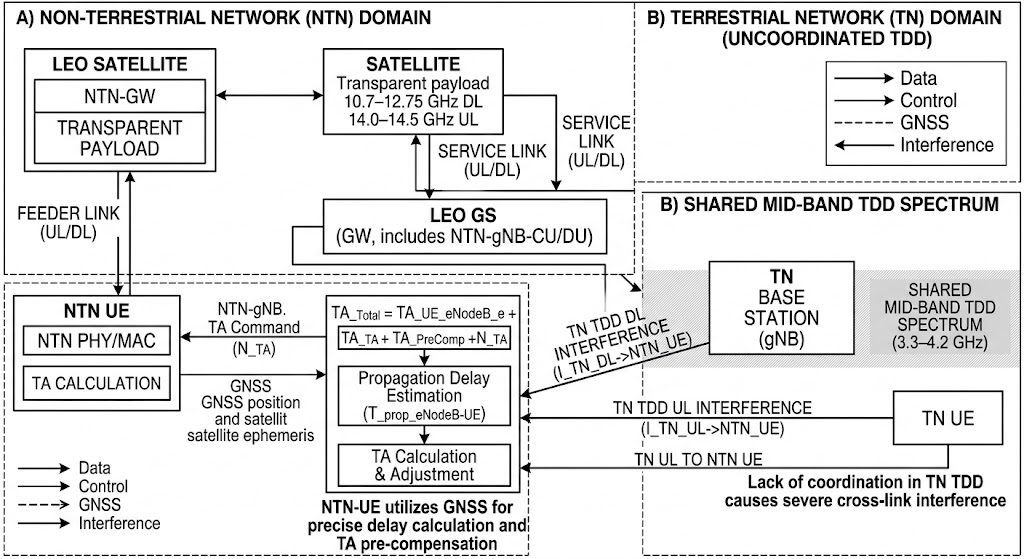
The U.S. carriers want to exclude the 2.5 GHz (Band n41) and 3.45 GHz (Band n77/n78) channels. Their argument centers on a hard physical constraint: orbital downlinks disrupt terrestrial Time Division Duplexing (TDD) networks. From the Backgrounder section of the CTIA Petition:
“This Notice of Proposed Rulemaking (Notice) would recognize American innovation and investment in Direct-to-Device (D2D) technology by proposing to modernize the Commission’s rules for D2D services in licensed spectrum. The Notice would propose to make an additional 482 megahertz of spectrum available for Supplemental Coverage from Space (SCS), eliminate burdensome SCS requirements that constrain innovation, and harmonize the SCS and mobile-satellite service (MSS) rules.
Further, the Notice would consider measures to modernize service rules in MSS-primary bands, including whether to confirm the exclusive nature of MSS bands. The item would seek comment on appropriate D2D performance requirements. These reforms would promote more flexible terrestrial, satellite, and hybrid business arrangements and incentivize high-quality D2D service for the benefit of consumers.’
TDD Timing Failures and Slot Overlap:
Terrestrial 5G in mid-band spectrum relies on strict TDD synchronization. Macro sites use GPS timing to align Downlink (DL) and Uplink (UL) frames. Short Guard Periods separate these slots to account for local signal propagation delays across 1 to 5 kilometers.
Low Earth Orbit (LEO) satellites operating between 300 and 550 kilometers destroy this timing model:
-
Propagation Delays: Orbital distances introduce propagation delays of 2 to 10 milliseconds.
-
Cross-Link Interference: A satellite downlinking in a nominal DL slot arrives at the ground out of phase. The signal bleeds past the Guard Period and hits terrestrial base stations during their scheduled Uplink receive slot.
-
Elevated Noise Floor: Because ground sites cannot adjust their receive windows for orbiting transmitters, these uncoordinated downlinks blind base station uplink receivers.
Handset Desensitization (The Near-Far Problem):
The carriers also modeled the uplink impact of standard mobile handsets attempting to reach space.
-
Maximum Handset Power: To establish a link with a LEO satellite overhead, a smartphone must transmit at its absolute limit—typically 23 dBm to 26 dBm.
-
Base Station Interference: If a user near a terrestrial cell sector edge fires up a satellite link, that high-power uplink transmission floods nearby ground base stations.
-
Sector Outages: T-Mobile’s RF modeling showed that a single high-power Direct-to-Device (D2D) handset can raise the uplink noise floor of a terrestrial cell site 1 to 3 miles away, effectively knocking out terrestrial uplink capacity for that sector.
Chart Generated by Google Gemini:
…………………………………………………………………………………………………………………………………………………………………………………………………..
3GPP Rel-17/18 NTN Specs [1.] vs. Proprietary Mid-Band D2D:
Note 1. ATIS, acting on behalf of 3GPP, submitted 3GPP Release 17/18 candidate specifications for 3GPP 5G-NTN: RIT (Radio Interface Technology) and 3GPP 5G-NTN: SRIT (Set of Radio Interface Technologies) to ITU-R WP 4B under Resolution ITU-R 65. The ITU-R formally adopted these 3GPP NTN specifications into Recommendation ITU-R M.2177-0 “Detailed specifications of the satellite radio interfaces of International Mobile Telecommunications-2020,” published in February 2026.
………………………………………………………………………………………………………………………………………………………………
The core conflict arises because proprietary mid-band SCS bypasses the physical layer synchronization built into official 3GPP Non-Terrestrial Network (NTN) standards.
                                ┌─────────────────────────────────────────────────────────┐
                                │Supplemental Coverage from Space ARCHITECTURES
                                └────────────────────────────┬────────────────────────────┘
                                                             │
                              ┌──────────────────────────────┴──────────────────────────────┐
                              ▼                                                             ▼
┌───────────────────────────────────────────────────────────┐ ┌───────────────────────────────────────────────────────────┐
│              3GPP Rel-17/18 NTN Standardized             │ │          Proprietary Mid-Band SCS (Rel-14/15 UEs)        │
├───────────────────────────────────────────────────────────┤ ├───────────────────────────────────────────────────────────┤
│ • Spectrum: Dedicated MSS Bands (e.g., S-Band n255/n256)  │ │ • Spectrum: Shared Terrestrial TDD (2.5 & 3.45 GHz)       │
│ • Timing: GNSS UE Self-Pre-compensation (TA Adjustment)   │ │ • Timing: Uncoordinated Orbital Delays (2ms–10ms)         │
│ • Frequency: Autonomous GNSS Doppler Offset Tracking      │ │ • Frequency: Uncorrected Doppler Shift vs. Terrestrial UE │
│ • Network Impact: Zero Cross-Link Interference            │ │ • Network Impact: Severe TDD Slot & Sector Blindness      │
└───────────────────────────────────────────────────────────┘ └───────────────────────────────────────────────────────────┘
-
Timing Advance (TA) Pre-Compensation: In 3GPP Release 17/18 NTN, the device uses its GNSS location and satellite orbital data (ephemeris) to compute physical range. The UE pre-adjusts its transmit timing before sending a frame, ensuring it arrives within the network’s expected window. Proprietary mid-band D2D attempts to serve legacy, non-NTN UEs that lack these satellite timing advance algorithms.
-
Doppler Compensation: LEO satellites move at ~7.5 km/s, causing carrier frequency offsets up to $\pm 40\text{ kHz}$. 3GPP Rel-17/18 requires explicit pre-compensation at the UE or network level to preserve subcarrier spacing. Uncoordinated terrestrial mid-band access lacks this Doppler tracking loop, driving adjacent-channel interference.
-
Spectrum Isolation: 3GPP NTN operates in dedicated Mobile Satellite Service (MSS) bands (like S-band n255/n256). In contrast, using non-standardized satellite overlays in primary terrestrial TDD spectrum forces space and ground networks to share the exact same radio channels.
Aggregate Power Flux Density (PFD) Limits:
Finally, the carriers warned against relying on single-beam interference models. A fleet of thousands of VLEO satellites creates moving, overlapping beam patterns over high-density population centers.
CTIA requested that if the FCC keeps mid-band spectrum in the SCS framework, it must enforce strict aggregate Power Flux Density (PFD) limits. These limits would force satellite operators to throttle downlink power over populated landmasses, protecting ground-based 5G networks.
……………………………………………………………………………………………………………………………………………….
Addendum:
For additional technical context on physical layer synchronization in satellite networks, see this video tutorial on 3GPP 5G NTN Doppler Shift & Timing Advance Explained. This visual guide breaks down how Release 17/18 user equipment calculates propagation delays and pre-compensates for high LEO velocity before transmitting.
……………………………………………………………………………………………………………………………………………….
References:
https://www.fcc.gov/ecfs/document/26110083526/1
https://www.fcc.gov/ecfs/filing/26110083510
https://docs.fcc.gov/public/attachments/DOC-425711A1.pdf
https://www.androidheadlines.com/2026/10/att-tmobile-verizon-fcc-satellite-spectrum-spacex.html
https://shattered.io/carriers-oppose-fcc-satellite-spectrum-290-mhz-starlink-2026/
https://www.3gpp.org/dynreport/38821.htm
https://www.3gpp.org/specifications-technologies/releases/release-18
SpaceX Moves to Acquire Nationwide 800 MHz Spectrum for Starlink Mobile D2D Service
Analysis & Opinion: SpaceX to build, lease or buy a hybrid/terrestrial satellite network?
Analysis: Amazon <- Globalstar – a strategic move for D2D and spectrum parity
European network operators in talks to form consortium to bid for EU satellite spectrum and provide D2M service
European Consortium 5G NTN transmission paves the way for standards based direct to device (D2D) connectivity
Tutorial: LEO Satellite Internet connectivity, D2D, and major providers
Ookla on the Global D2D Market
Analyst firms wide forecasts for the LEO satellite direct-to-device (D2D) market